The quick version
- Perth’s native plant palette is one of the richest on Earth, and in 2026, homeowners are designing with it rather than settling for it.
- The standalone barbecue on a concrete slab has had its day. Connected outdoor rooms with kitchens, pergolas and fire pits are replacing it.
- Retaining walls are pulling double duty: holding back soil while framing fire pits, creating terraced gardens and doubling as built-in seating.
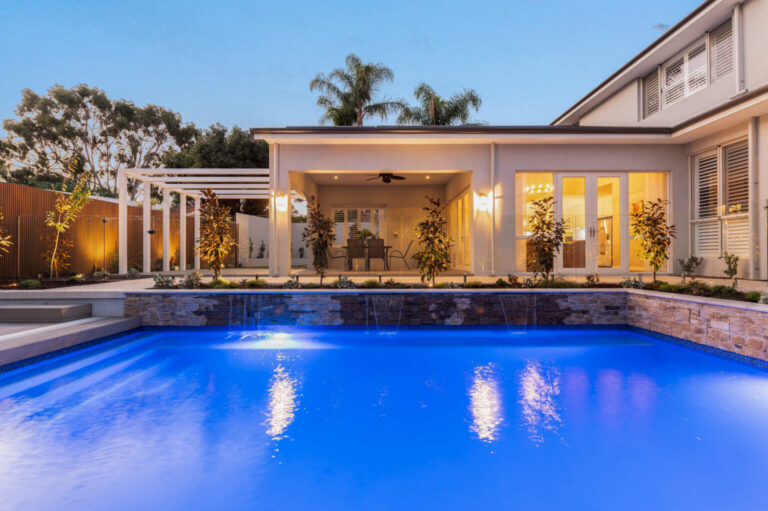
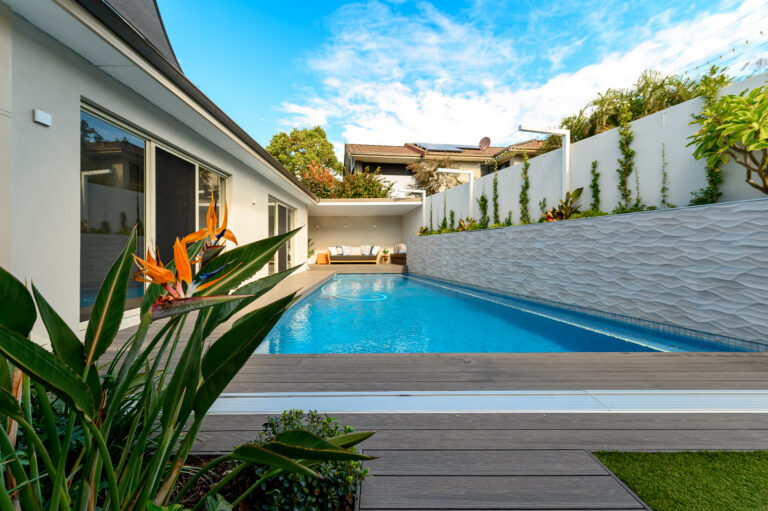
- Pool areas are being designed as complete entertaining zones, not just a swimming hole with some pavers around it.
- Two watering days a week goes further than you’d think when your reticulation is smart enough to make each session count.
It’s late February, and your backyard looks like it’s been holding its breath since November. The lawn is crispy at the edges, the paving radiates heat into the evening, and the one garden bed you planted three years ago has quietly given up. You’ve been browsing landscaping ideas. You know this space could be something. You’re just not sure what’ll actually work here.
With more than a third of domestic water in WA going on gardens, what you plant and how you water it matters more in Perth than almost anywhere else in Australia. The backyard landscaping trends reshaping Perth in 2026 aren’t one single shift. There are five, and they’re working together.
Waterwise native gardens have gone mainstream
For years, ‘going native’ in a Perth garden felt like a compromise. You’d trade colour and structure for something that survived. That perception has flipped.
Perth sits within the Southwest Australia biodiversity hotspot, home to nearly 6,800 plant species, and the nursery industry has caught up. The 2025–2026 Waterwise Greening Scheme, a joint initiative between the Water Corporation and the WA Government, launched with a new Kings Park Favourites range: 24 hardy, ornamental native species bred for WA conditions by the horticultural team at Kings Park. These aren’t scraggly bushland survivors. They’re design-grade plants, bred for form, flower and resilience.
The numbers are hard to ignore. The scheme has distributed more than 400,000 free native plants to WA households. Over 20 Perth councils now offer verge rebates for waterwise planting. And established waterwise gardens can reduce household garden water use by up to 50%, according to the Water Corporation.
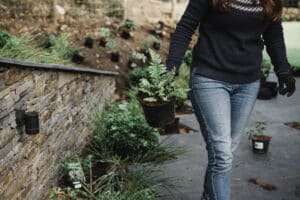
Creating a garden that thrives on Perth’s two-day watering roster comes down to smart plant selections: Lomandra and Westringia for structure, Grevillea for screening, Banksia for height, and crushed granite mulch instead of lawn. For a deeper look at what works where, the guide to native plants suited to Perth gardens covers species by use and position.
Outdoor living zones that earn their keep year-round
Your outdoor living space should feel like a genuine extension of your home. Most Perth backyards still feel like an afterthought. That gap is closing fast.
Where homeowners once dropped a barbecue on a slab and called it done, the move now is toward outdoor kitchens with built-in prep areas, integrated fridges and benchtops that match the home’s interior palette. Glen Dimplex Australia CEO David Woodward summarised the shift in Appliance Retailer: the outdoor kitchen is becoming the indoor kitchen’s equal, and the days of the standalone barbecue are behind us.
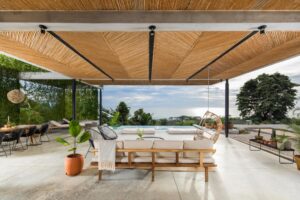
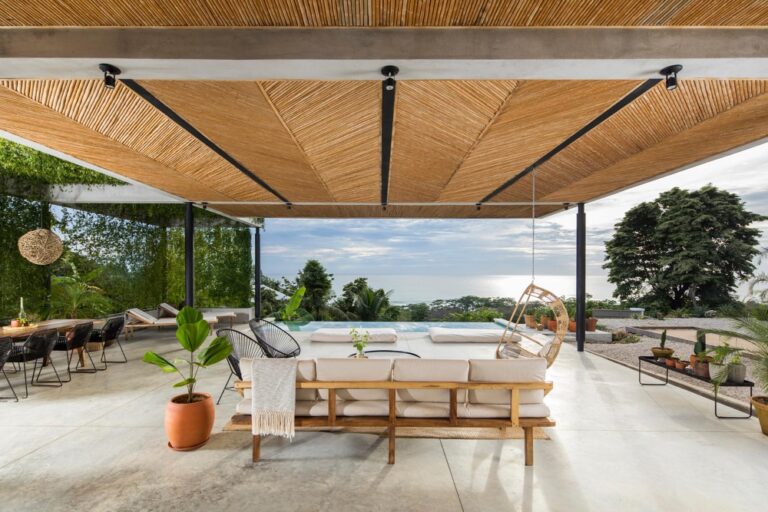
A well-designed patio and pergola is the backbone of these living spaces. It defines the outdoor dining zone, provides shade that actually works in Perth’s UV, and extends the usable hours of the space well into the evening with the right lighting.
Fire pits are gaining serious traction, too. Positioned safely away from the main structure with built-in seating in recycled brick or limestone, a fire pit zone creates a gathering point that works independently of the alfresco area. Perth’s mild winters make it year-round. It’s one of the backyard landscaping trends Perth homeowners find earns its keep fastest.
Retaining walls are becoming a genuine design feature
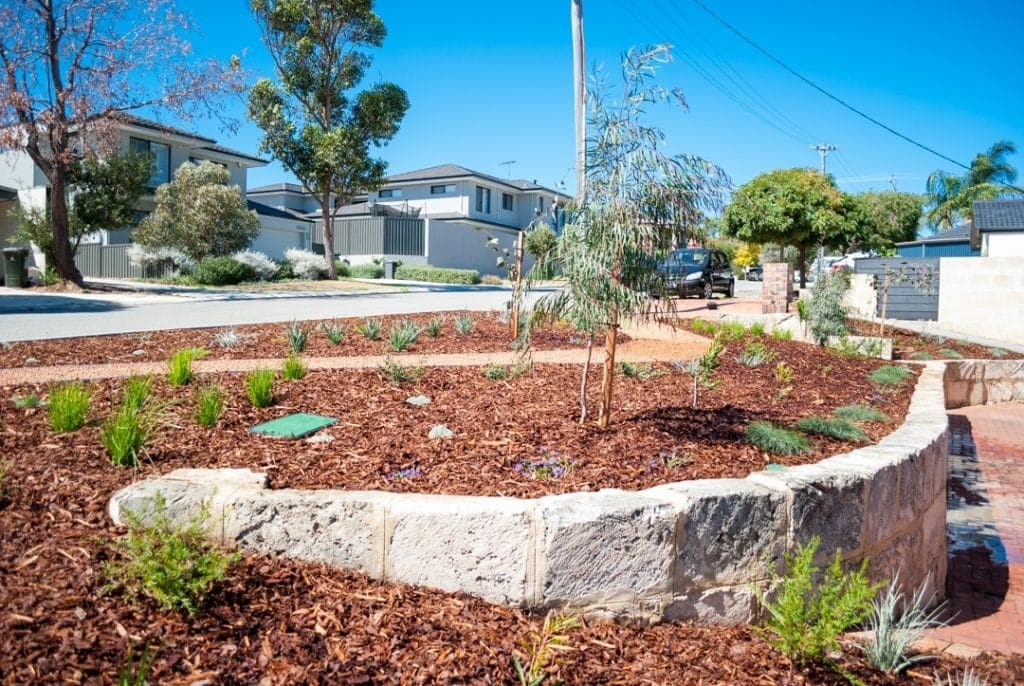
This is the trend that most people don’t see coming. Retaining walls in Perth have always been a practical necessity: you have a slope, you hold back the soil, you move on. But the way they’re being designed, finished and integrated in 2026 has shifted dramatically, making this one of the less obvious but most impactful backyard landscaping trends in Perth.
Perth’s housing market is partly driving the change. Block sizes are shrinking nationally (PropTrack data shows the typical transacted house land area fell from 670 square metres in 2015 to 645 square metres), and Perth’s infill development pipeline is accelerating that locally. Smaller blocks mean more level changes and more situations where a retaining wall isn’t optional. When a wall is going in, it makes sense to design it as a feature regardless.
What the new walls actually look like
The dominant material trend is concrete sleeper systems with contemporary finishes. Austral Masonry (part of the Brickworks group) notes that modern retaining walls now replicate natural timber grain or stone textures and come in neutral tones such as charcoal, sandstone, and light grey that match contemporary home facades.
In Perth, limestone remains a strong choice for traditional aesthetics. It’s locally quarried, UV-stable and handles coastal conditions well. But for a cleaner, modern look, concrete sleepers with smooth or textured finishes are increasingly dominant. They resist rot and termites, handle Perth’s extreme temperature swings, and require almost no maintenance.
For blocks with greater engineering requirements, Brickworks’ Keystone KeyMass system (a large-format block four times the size of standard retaining wall blocks) is designed to last over a century and works for both straight and curved designs.
Walls that frame, seat and shape a space
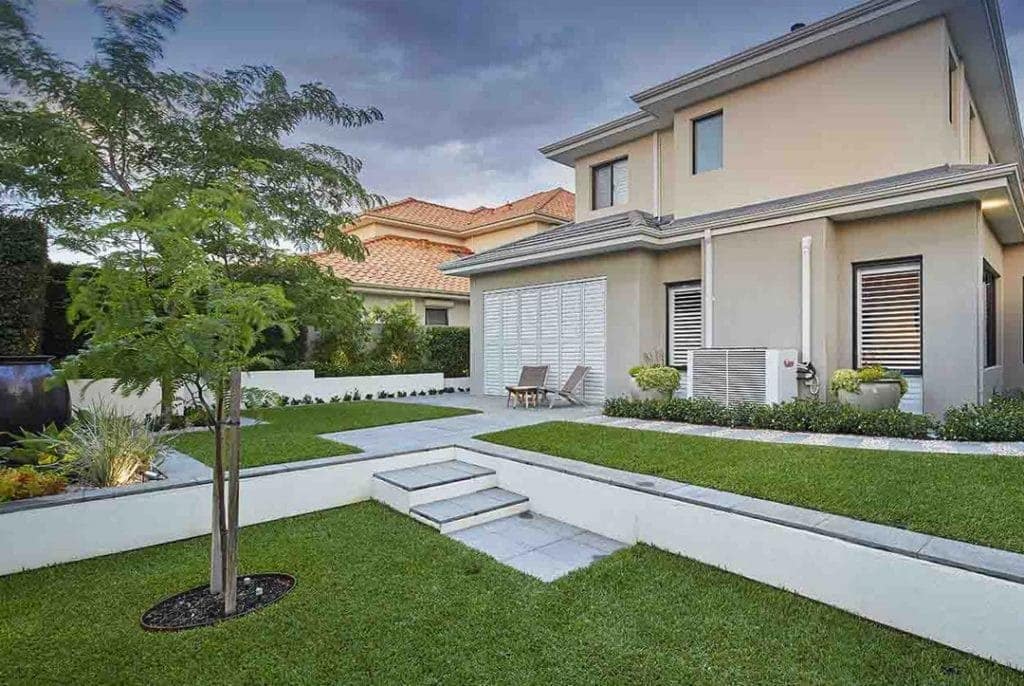
The real shift is in what the walls do. Retaining walls in 2026 Perth backyards are being designed to double as seating areas along fire pit zones, as raised planter boxes framing alfresco areas, and as terracing that turns a sloped block into multiple usable outdoor rooms. Thoughtful garden design treats the wall as part of the overall composition, not a structural item to be hidden behind planting.
Terracing is particularly powerful on Perth’s slopes. A series of lower walls stepping up a grade is structurally simpler and more affordable than a single tall wall, and it creates distinct zones: lawn on one level, entertaining on another, garden beds stepping up to a rear boundary.
Perth’s sandy Bassendean soils make engineering non-negotiable. These soils shift when wet after a dry summer, so drainage behind every wall and building permit compliance (required for any wall retaining more than 500mm of soil) are essential. For a full breakdown, the guide to retaining walls in Perth covers materials, drainage and permits.
Pool landscaping with a resort-style edge
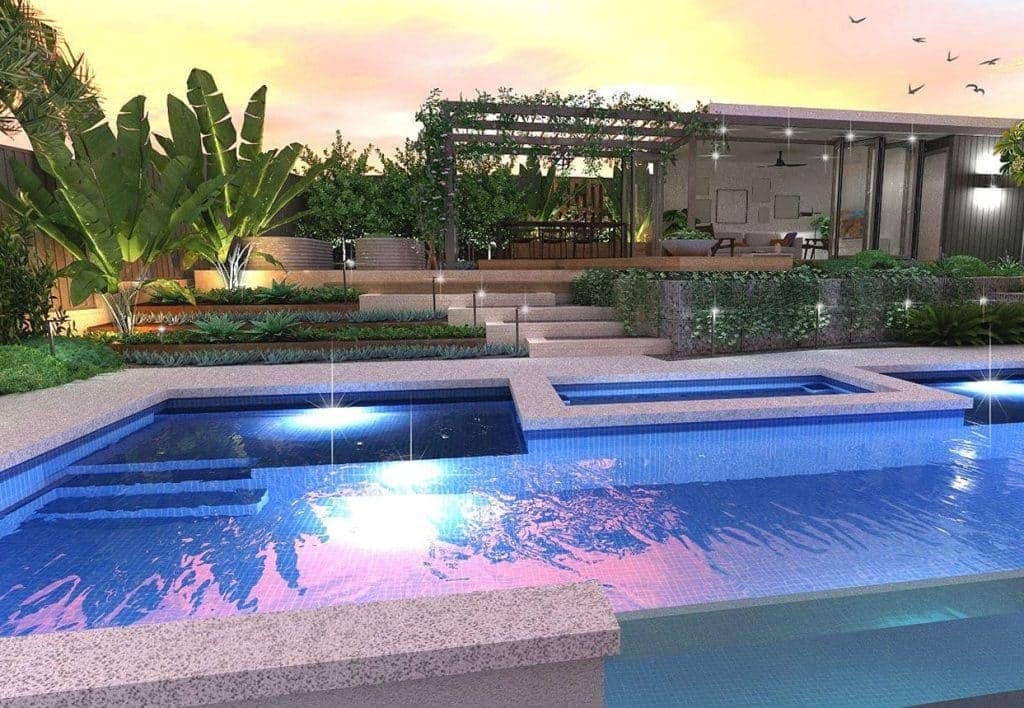
You’ve already got the pool. Now look at everything around it. That’s where the real value sits in 2026.
Roy Morgan research puts Perth at 17% of households with a pool or spa, among the highest in Australia. But the trend isn’t about the pool itself. Tanning ledges and wet decks (shallow, submerged platforms designed for lounging) are one of the fastest-growing features nationally, and Beauticate’s 2026 pool design report quotes designers calling them especially popular with young families who want separate splash and relaxation zones.
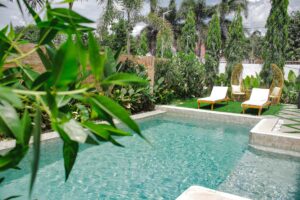
What works poolside in Perth demands local thinking. Low-litter natives like Lomandra and Dianella handle reflected heat, won’t clog the skimmer, and look sharp year-round. Weather-resistant outdoor furniture anchors the lounge area, a water feature adds sound and movement, and non-slip paving that stays cool underfoot ties the space together. The key is zoning: don’t build the whole backyard around the pool. Create areas that flow into one another, and treat pool landscaping as one connected design rather than a swimming hole with some leftover dirt around it.
Smart reticulation and drainage
Two days a week. That’s all the water your garden gets from a sprinkler in Perth, with a full switch-off every winter from June to August. Since September 2022, bore users are on the same roster, a change the WA Government estimates saves up to 30 billion litres of groundwater per year.
Smart controllers are making those two days count. Weather-based units pull local forecast data and adjust run times automatically, skipping a cycle when rain is forecast and extending it during a heatwave. Soil moisture sensors trigger irrigation only when the root zone actually needs it. The Water Corporation’s 2025/26 Waterwise Irrigation Rebate offers Perth homeowners up to $200 toward fixing leaks and faulty valves, and a trial across 60 Perth homes found smart controllers cut water use by around 15%.
Drainage matters just as much. Perth’s sandy soils turn hydrophobic after a dry summer, repelling winter rain rather than absorbing it. Soakwells, ag pipe behind retaining walls, and subsoil drainage need to be designed in from day one. It’s the least glamorous of the backyard landscaping trends in Perth, but the one that protects everything else.
Ready to reshape your backyard?
At Luke’s Landscaping, we’ve watched backyard landscaping trends in Perth evolve since 2008. We know which ideas hold up and which ones don’t. We understand sandy soils, water restrictions, UV conditions and council approvals, and every project starts with the site, the budget and how you actually want to use the space.
Our team handles everything from landscape design through to construction and handover, with one point of contact managing every stage.
Get a free quote and let’s talk about what your backyard could look like this time next year.
Frequently asked questions
Waterwise native gardens lead the backyard landscaping trends Perth homeowners are backing in 2026. Low-maintenance species like Lomandra, Grevillea and Kangaroo Paw, combined with contemporary hardscaping (limestone or concrete retaining walls, crushed granite mulch, drip irrigation), are the dominant look. The shift is driven by water restrictions and the quality of native species now available through breeding programmes at Kings Park.
In most cases, yes. Under WA’s Building Regulations 2012, any retaining wall holding back more than 500mm of soil requires a building permit and typically structural engineering certification. Even walls under 500mm may need approval if they affect drainage onto neighbouring properties. Requirements vary between councils, so confirm with your local authority before starting.
It depends on the scope. A basic refresh (turf, garden beds and simple hardscaping) might start from $5,000 to $20,000. A full build including retaining walls, paving, an alfresco area and planting can range from $15,000 to $60,000 or more, depending on materials, access and design complexity. The best way to get an accurate figure is a site-specific quote.
Autumn (March to May) is the ideal window. Plants establish faster in cooler temperatures, concrete and paving set without heat stress, and incoming winter rain helps new gardens settle before summer. Good landscapers book out ahead, so planning over summer for an autumn start is a smart approach.