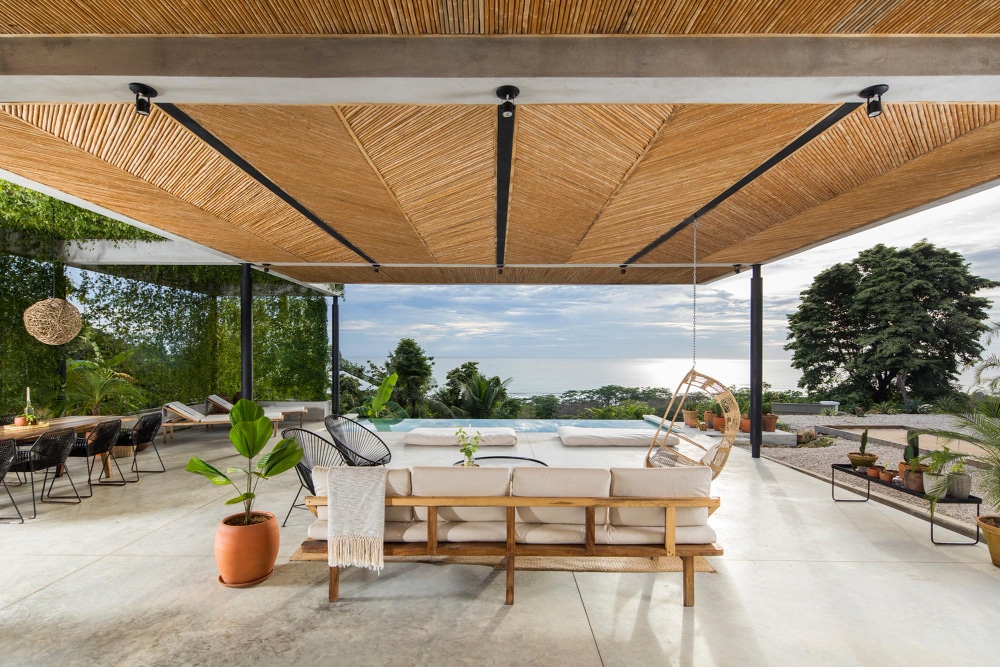
The quick version
- Roof first: The material and pitch of your roof are the most important patio design idea on this list. Insulated panels keep the space cool year-round; the wrong choice leaves you with an expensive greenhouse.
- Your floor is a heat battery: Unshaded concrete can become extremely hot in direct summer sun and keeps radiating heat long after sunset. Travertine and large-format porcelain are your best bets for barefoot comfort.
- Work with the Fremantle Doctor, not against it: A well-designed outdoor area channels Perth’s famous afternoon breeze. A poorly designed one traps heat instead.
- An outdoor kitchen transforms how you live: Done properly-compliant gas, marine-grade finishes, real ventilation-it becomes a practical extension of the home rather than just an aesthetic BBQ area.
- Native garden borders complete the picture: Drought-tolerant WA natives look stunning and frame an outdoor patio design better than any screen or fence.
- Outdoor lighting doubles your hours of enjoyment: Zoned LED systems transform the outdoor area after dark for almost no running cost.
- Erase the threshold: A seamless indoor-outdoor connection makes smaller Perth homes feel significantly larger-especially when planned early in the design stage.
There’s a version of your backyard that exists right now only in your imagination. You can almost feel it-the warmth of an evening without the sting of the sun, the smell of something good on the grill, the sound of conversation and cold drinks clinking together. That backyard exists. But getting there takes more than pointing at a roof style in a catalogue.
In Perth, patio design ideas that actually work aren’t born from brochures. They’re born from a genuine understanding of this climate-3,200 hours of sunshine per year, summer days that regularly exceed 35°C, and an afternoon sea breeze that can be your greatest ally or your most infuriating enemy. The decisions you make before a single footing is poured will determine whether your outdoor living space is genuinely usable year-round-or just a shade structure that’s too hot to sit under from October to April.
Here’s what’s worth knowing. And a few things most Perth homeowners only discover after the concrete has set.
1. Design your roof around Perth’s climate, not just your budget
Most people begin exploring patio design ideas by looking at roof styles. Gable or flat? Colorbond or polycarbonate? These are valid questions-but they’re the second question, not the first. That is: how do you want this outdoor living space to actually feel at 2 pm on a 38°C Tuesday in February?
Answer that honestly, and the roof selection becomes straightforward.
The three main options across WA outdoor patio designs are single-skin Colorbond steel, polycarbonate panels, and insulated composite panels-the most recognised being SolarSpan by Bondor and Cooldek by Stratco. Single-skin Colorbond is cost-effective and tough, but its core limitation remains: it provides shade, not insulation. On a scorching Perth afternoon, the air underneath can still feel oppressive. Polycarbonate works well on south-facing patios where light is welcome, but as a primary roof covering, it functions like a greenhouse-use it as a skylight element, not the whole ceiling.
Insulated composite panels are the standout performer. The sandwich construction-Colorbond top sheet, foam core, steel ceiling panel underneath-physically interrupts heat transfer. SolarSpan achieves R-values up to R4.85 at 200mm thickness; Cooldek 150mm panels achieve approximately R3.7–R4.3 depending on profile and conditions. Those figures are comparable to residential ceiling insulation levels. The space stays genuinely comfortable. Not just tolerable, but comfortable. Insulated panels can also reduce the need for intermediate beams, subject to engineering and span tables, creating a flush ceiling finish that feels like a natural extension of the home.
The shape of your roof matters more than you think
A gable roof creates a large air void above the living area. Hot air rises into it naturally, and when designed with ridge or gable ventilation, can allow hot air to escape-passive climate control built into the geometry. Flat and skillion roofs are excellent for narrow Perth lots and tighter budgets, but require deliberate ventilation openings to compensate for what the gable void does for free.
Choose your roof profile for the climate first. The aesthetic will follow.
Explore our patio and pergola services to see what different roof configurations look like across Perth homes.
2. Choose flooring that won’t work against you after dark
Here’s a patio idea most people don’t consider until they’re already living with the consequences. Your floor isn’t just a surface. In Perth, it’s a thermal battery, and depending on what you’ve chosen, it either works for you in the evening or against you.
Dense materials like concrete and heavy masonry pavers absorb heat aggressively throughout the day and release it just as aggressively after dark. An unshaded concrete slab in direct Perth summer sun can reach up to 50–60°C-a genuine burn risk for bare feet and pets, and a heat source working against you all evening.
Travertine is the standout performer. This natural limestone is porous at a microscopic level, resisting heat transfer and staying remarkably cool underfoot even in direct summer sun. It ages beautifully and pairs naturally with the earthy tones that dominate contemporary Perth outdoor patio designs. Large-format porcelain tiles are the other high-performer-non-porous, stain-resistant, low maintenance, and cooler underfoot than concrete. Timber and composite decking work well for elevated patios and sloped blocks; if going composite, choose lighter colours and ensure adequate roof coverage.
One caveat on concrete: fully shaded beneath an insulated roof, it becomes a reasonable and cost-effective choice. Its thermal mass even works in your favour-absorbing the cool of night air and holding it into the morning. The mistake is installing it in an unshaded situation and expecting different results.
Compare paving materials anddecking options to find the right fit for your outdoor area.
3. Design for the Fremantle Doctor, not against it
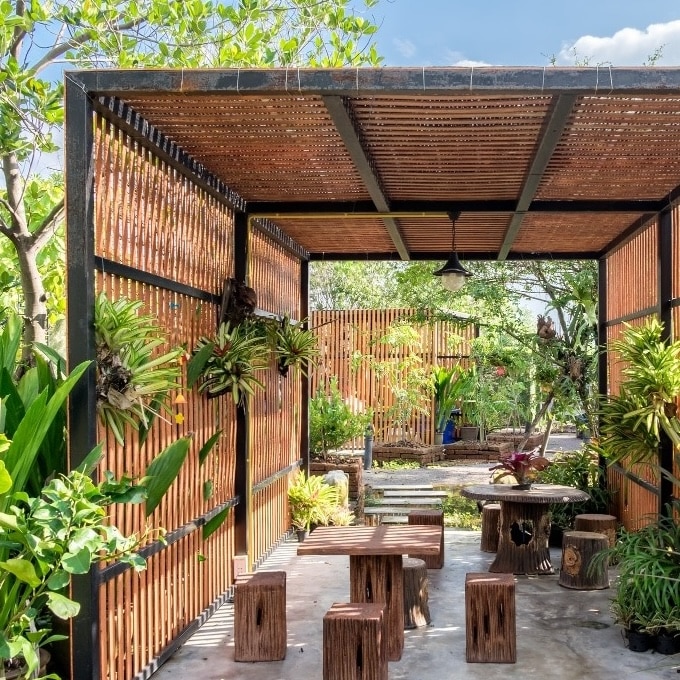
Perth has a secret weapon. Every summer afternoon, a south-westerly sea breeze typically arrives in the afternoon, often bringing a noticeable drop in temperature. Locals call it the Fremantle Doctor. And if you’ve experienced a Perth afternoon without it, you understand the name.
The key insight that separates genuinely clever outdoor patio design ideas from generic ones: the Fremantle Doctor should be channelled rather than blocked. A fully enclosed outdoor area on a hot day can trap heat and limit natural airflow-and the most reliable natural cooling asset in the city can’t help if you’ve sealed the walls. Position your outdoor area so the prevailing south-westerly airflow enters from one side and exits cleanly from the other. Allowing airflow from one side to the other encourages cross-ventilation and helps reduce heat build-up.
When control is needed, track-guided blind systems such as Ziptrak or Slidetrack with 95–99% UV-rated mesh fabrics give you a mechanical solution without sacrificing the option to open up entirely.
One structural point worth noting: all Perth patio structures must comply with Australian Standard AS 4055 (Wind Loads for Housing). Most suburban homes rate N1 or N2; exposed coastal or hilltop properties can reach N3 or beyond. These ratings govern footing depth, column gauge, and fastener specifications. Non-compliant structures can create insurance and safety risks, particularly in high-wind events.
4. Build an outdoor kitchen worth actually cooking in
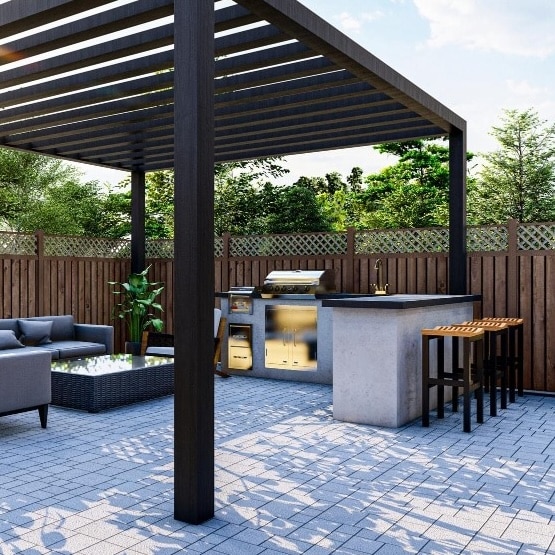
Ask any Perth homeowner who has a proper outdoor kitchen whether they’d go back to cooking inside in summer. The answer is always the same. Short. Definitive. Usually involves a laugh.
The outdoor kitchen is one of the most impactful additions to any patio. It doesn’t just add a feature-it changes how your household operates across the warmer months. The kitchen migrates outside, the interior gets its temperature back, and summer evenings become something to plan around.
Material selection is non-negotiable in coastal suburbs. Marine-grade stainless steel (grade 316) resists the salt-laden air that can corrode quickly in coastal conditions. Cabinetry should be UV-resistant; standard finishes deteriorate rapidly under Perth’s UV index. For bench surfaces, poured concrete, natural stone, and quality porcelain are all excellent choices.
For outdoor furniture and patio furniture in the kitchen zone, apply the same durability logic: powder-coated aluminium, UV-stabilised synthetic weave, or teak with a weatherproof finish will outlast anything chosen purely for aesthetics.
Read more about outdoor kitchens in Perth and how we approach the design and build process.
5. Frame the outdoor area with a drought-tolerant native garden border
Hardscaping alone doesn’t make an outdoor living space. It makes a carport. The planted border-softscaping wrapping the edges of the outdoor area-is what gives a space its sense of enclosure, warmth, and arrival. Without it, even the most considered patio design ideas fall flat.
In Perth, the right plant choices matter considerably. Sandy soils, infrequent rainfall and sustained summer dry periods make standard ornamentals a significant ongoing water commitment. The better answer-now firmly mainstream in Perth landscaping-is Western Australian native plants. Some of the most extraordinary textures and colours available to any Australian garden come from WA’s own flora.
Kangaroo Paw (Anigozanthos) thrives in full sun and sandy soils with almost no supplemental water once established. Grevillea ‘Bronze Rambler’ is tough, low-growing, and attracts native birdlife year-round. Banksias deliver bold structural form in well-drained soils-though they’re highly sensitive to phosphorus, so soil preparation matters. Eucalyptus caesia (Silver Princess) is one of the finest small native trees available to Perth homeowners, with weeping silver foliage and vivid crimson flowers.
Research indicates that replacing irrigated turf with established natives can reduce garden water consumption by up to 60%-meaningful financially as much as environmentally.
Explore Australian native plants for Perth gardens or see how softscaping and hardscaping work together through our landscape design service.
6. Add outdoor lighting that changes everything after dark
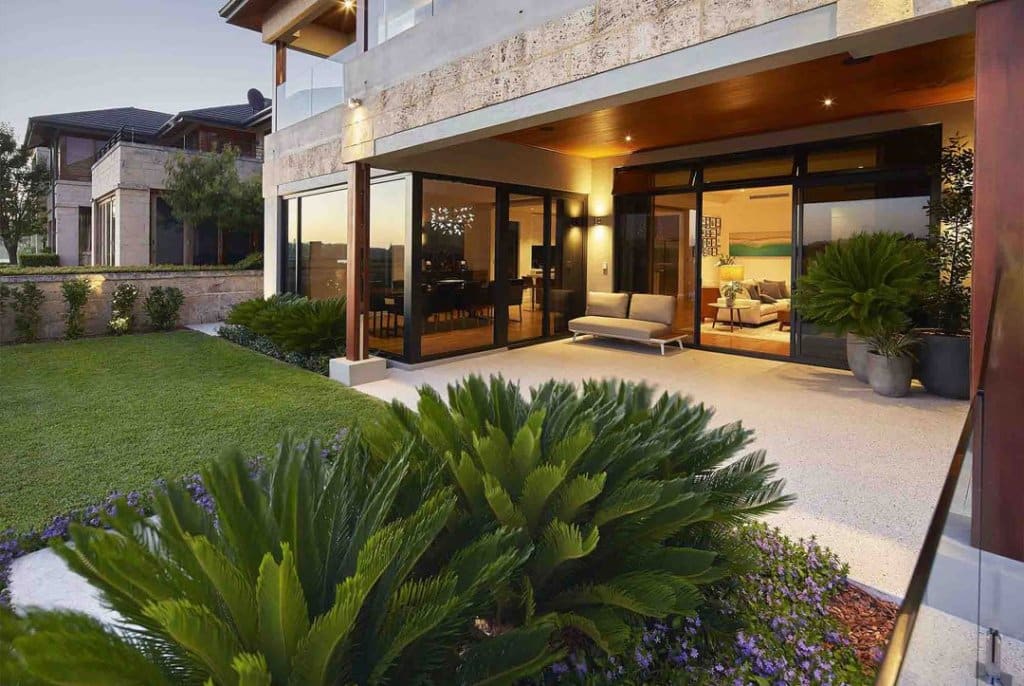
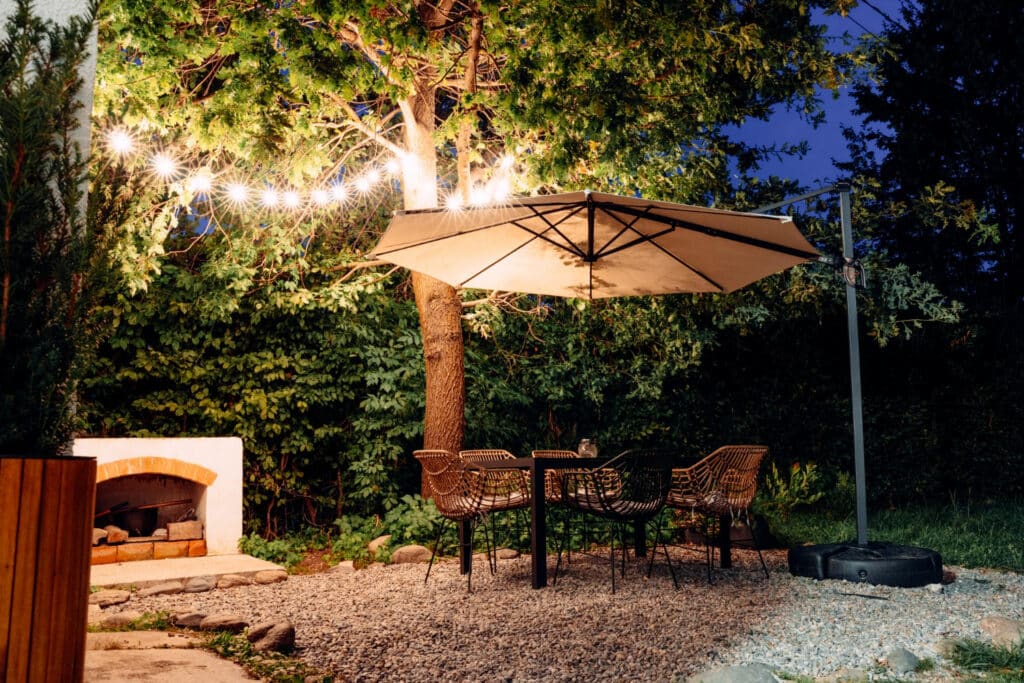
How many hours a day is your current outdoor space actually usable? On a poorly shaded Perth patio in summer, the honest answer might be four or five. A properly insulated, well-ventilated patio extends that significantly-but what extends it fully into the evening and through winter is outdoor lighting. It’s the last thing homeowners budget for and the first thing they wish they’d invested in more.
The most considered outdoor patio designs use three layers.
Ambient lighting
Ceiling-level LED downlights and ceiling fans with integrated lighting create general illumination and set the baseline mood.
Task lighting
Focussed light over the outdoor kitchen, dining setting, and BBQ zone makes these areas functional after dark.
Accent lighting
Low-level pathway lighting, uplighting into feature plants or retaining walls, and under-bench LED strip lighting-this is where atmosphere lives and where the outdoor area becomes genuinely beautiful at night.
Insulated roof panels make implementation seamless: SolarSpan and Cooldek both include integrated concealed electrical channels, allowing LED downlights to sit flush within the panel with no exposed conduit. The result is a ceiling finish indistinguishable from a polished interior.
Explore our outdoor garden lighting service to see what a properly layered design looks like in practice.
7. Erase the line between inside and outside
Of all the outdoor patio design ideas on this list, this one costs nothing extra-if you plan for it before construction begins. The payoff is disproportionate to its simplicity.
Remove every visual and physical boundary between your interior living space and your outdoor area. Start at the door. A standard sliding glass panel keeps the inside and outside as two separate experiences. Replace it with bi-fold or stacking glass panels that fold away entirely, and the threshold disappears-the indoor living room and the outdoor area become one continuous space. On a Perth afternoon with the Fremantle Doctor running through, that combined space breathes together. The house feels genuinely bigger.
The floor carries the illusion further. The same large-format tile running continuously from inside to outside at the same elevation-no step, no material change, no tonal shift-makes the eye read it as one large space. For Perth homeowners on compact lots, this single decision can dramatically reduce the psychological constraint of a small backyard without a single additional square metre being built.
At the perimeter, low-profile planter boxes maintain sightlines into the garden where solid fencing would close the space down. Retaining walls capped with treated timber serve simultaneously as structure and integrated bench seating-a critical efficiency where patio furniture placement competes with available floor space. When patio furniture is considered as part of the design rather than sourced afterwards, the entire outdoor living space coheres rather than feeling assembled.
Don’t forget winter
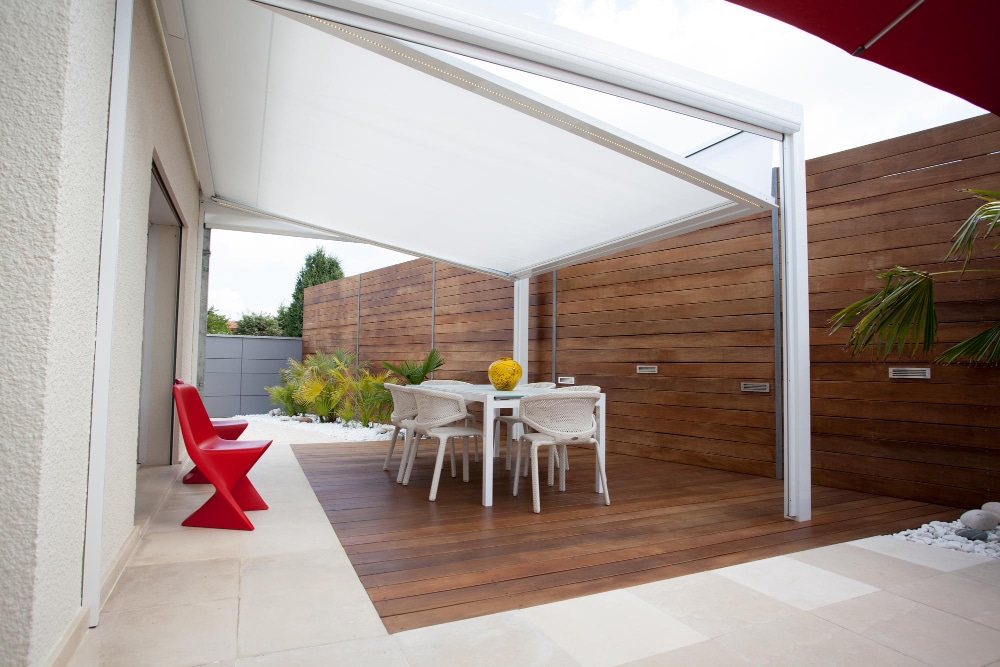
Perth winters are mild-but June through August is not outdoor dining weather without some thought applied. A patio designed purely for summer will sit dormant for a third of the year. A fire pit changes that entirely. Safely distanced from the main structure, it extends the outdoor living season to twelve genuine months and creates a focal point that summer spaces often lack. Designs in recycled brick or local limestone suit the WA aesthetic well and are cost-effective to build. Pair the fire pit zone with weather-resistant lounge seating-enough for six to eight people-and you have a distinct social space that functions independently of the dining area under the main roof.
Explore our fire pit and outdoor fireplace options to see what suits your outdoor patio design.
The real question to ask before you start
Most patio design decisions get made by pointing at a picture. Most patio regrets follow the same process.
The more useful starting point isn’t “What style do I want?” It’s “When do I actually want to be outside-and what’s currently stopping me?”
If it’s too hot by 11 am, your roofing material, floor surface, and ventilation are the priority. If you never use the outdoor area at night, your lighting design is the thing to solve. If it feels disconnected from the rest of the house, flooring continuity and threshold elimination will change everything-and they’re among the lowest-cost decisions on the project.
Good patio design ideas start with how you actually live. Everything else is in service of that answer.
Ready to design a patio that’s built for Perth?
At Luke’s Landscaping, we design and build outdoor living spaces engineered specifically for WA conditions-the heat, the sandy soils, the Fremantle Doctor, and the way Perth people actually want to live. Every outdoor patio design we deliver is tailored to the block, the home, and the people using it.
Take a look at our recent projects for inspiration, explore our full range of patio and outdoor living services, or get in touch with the team to start the conversation.
Frequently Asked Questions
In most cases, approval is required. Attached patios typically need a building permit, while small freestanding patios may be exempt under certain size and height limits. Projects that meet the definition of builder work (often where a permit is required and the value exceeds $20,000) may need to be completed by a registered building contractor. Always confirm requirements with your local LGA before construction begins.
Insulated composite panels lead for year-round comfort. SolarSpan reaches up to R4.85 at 200mm thickness. Meanwhile, Cooldek 150mm panels achieve approximately R3.7–R4.3 depending on profile and conditions. Single-skin Colorbond is durable and cost-effective but relies on reflective coatings rather than insulation. Polycarbonate is best used selectively as a skylight element rather than a primary roof covering.
Travertine and large-format porcelain tend to stay cooler underfoot than concrete. Travertine’s natural porosity resists heat absorption and is widely recommended by Perth stone suppliers for hot-climate outdoor patio designs. Unshaded concrete and darker decking materials can become extremely hot in direct summer sun, posing a risk for bare feet and pets.
Kangaroo Paw, Grevillea ‘Bronze Rambler’, Banksias, and Eucalyptus caesia (Silver Princess) are all excellent choices-drought-tolerant, suited to Perth’s sandy soils, and visually striking. All are waterwise once established, often reducing irrigation needs compared to lawn or high-water ornamentals.