Here’s a quick summary
- Perth garden native plants are adapted to local sandy soils, extreme heat and low rainfall, so they need far less water and maintenance than most exotic species.
- WA’s southwest is one of only 34 globally recognised biodiversity hotspots, with over 6,700 described plant species. The colour, texture and structural variety available to Perth homeowners is enormous.
- Native gardens don’t have to look wild or scrubby. With the right species and layout, they can feel as polished and designed as any contemporary outdoor space.
- Kangaroo Paw, Grevillea, Lomandra, Westringia and Banksia are among the most versatile Perth garden native plants for screening, borders, feature planting and low-maintenance designs.
- Choosing plants based on your garden’s size, sun exposure and intended use is the difference between a garden that survives and one that thrives.
Drive through any Perth suburb in February and you’ll spot the pattern. Some front gardens are brown, patchy and clearly losing the fight against summer. Others look like nobody’s touched them in weeks – and somehow look better for it. Green. Textured. Flowering.
Nine times out of ten, the difference is native planting.
The garden that’s struggling is full of species that belong in an English cottage or a Balinese resort. The one that’s thriving is full of plants that actually evolved here.
Perth gets roughly 3,200 hours of sunshine a year, making it the sunniest capital city in Australia. Almost 80% of the city’s rain falls between May and September. Summer temperatures regularly push past 35°C. Your garden is essentially on its own for four to five months of dry, relentless heat.
Perth garden native plants evolved in these exact conditions. Sandy, nutrient-poor soils. Extreme UV. Extended dry stretches with no rain in sight. They don’t just cope with Perth’s climate. They’re built for it.
Half your water bill is going into the sand
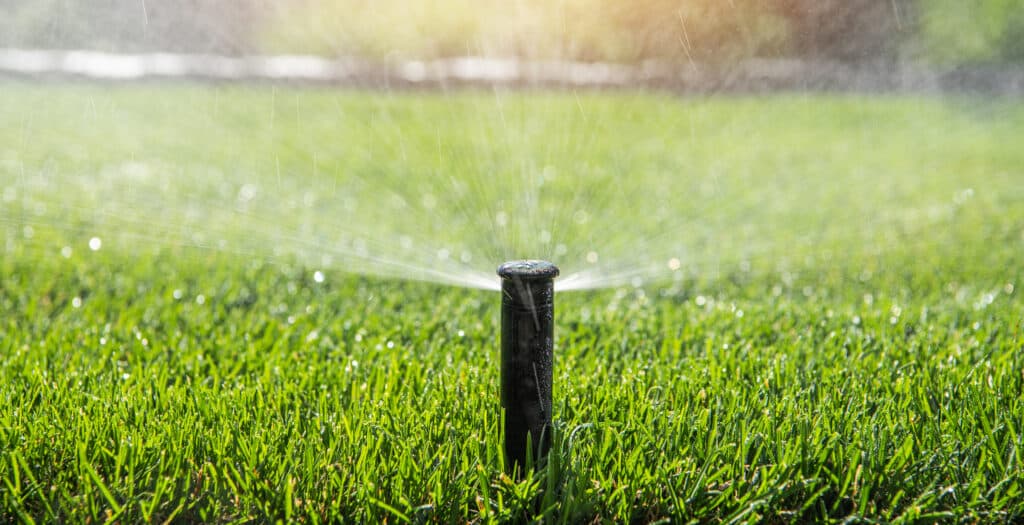
Here’s a number that might surprise you. Perth households use more than half their total water on gardens and lawns. Under the current two-day-a-week sprinkler roster, that’s a significant chunk of your bill flowing straight into the sand.
Well-chosen natives change that equation entirely. Once established, most waterwise native species need watering only once a week in summer – on your rostered days – or less. Some need no supplemental water at all. Established natives in Perth’s sandy soil develop deep root systems that access moisture well below the surface, long after the topsoil has dried out. These are genuinely drought tolerant plants – not just species that tolerate dry spells, but ones that evolved to thrive through them.
The maintenance gap is just as real. No weekly mowing, no constant feeding, and no replacing dead exotics every spring. A garden bed planted with Lomandra, Dianella and Grevillea looks good twelve months of the year with a fraction of the input a traditional garden demands.
And there’s one more thing that most people don’t realise. Perth sits within the Southwest Australia biodiversity hotspot, home to nearly 6,800 plant species – roughly half of which are found nowhere else on Earth. The idea that going native means settling for a limited palette is the opposite of the truth. Perth homeowners have access to one of the richest selections of plants for landscaping available to any gardener, anywhere. Western Australia alone contributes thousands of unique Australian plants to that list, many of which are perfectly suited to suburban gardens.
Scrubby? Not even close
This is the misconception that holds people back. They hear “native garden” and picture dried-out scrub, random bushes and a vague sense of giving up on aesthetics.
Walk through the Backyard Botanicals Garden at Kings Park and that idea falls apart in about ten seconds. The display was designed specifically to show Perth homeowners how natives work in a backyard setting — neat, structured and genuinely attractive. Every plant on show is waterwise, beautiful and available from local nurseries.
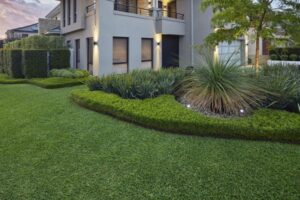
Modern native garden design uses the same principles as any polished outdoor space: repetition, contrast, layering and intentional structure. The difference is the plant palette works with Perth’s conditions instead of fighting them. If you’re curious about how microclimates influence Perth garden design, understanding your site’s sun, shade and wind patterns is one of the most effective ways to get your plant choices right from the start.
Mass-planted Lomandra in clean, rhythmic drifts along a paved pathway creates a look that’s effortlessly contemporary. Westringia, sometimes called native rosemary, can be clipped into formal hedges that rival English Box for neatness — you’ll see it in roundabouts and commercial plantings across Perth for exactly that reason. Kangaroo Paw (Anigozanthos) planted in bold clusters delivers months of vivid colour in reds, oranges, yellows, pinks and whites. Banksia provides sculptural, architectural form that holds its shape through every season.
Kings Park’s horticultural team has even released a curated Kings Park Favourites range – 24 species specifically endorsed for WA gardens after 60 years of cultivation expertise. If you’ve ever felt overwhelmed by the sheer number of native Australian plants on offer, that’s a solid starting point.
Matching the plant to the spot
Not every native suits every spot. The right choice depends on your garden’s size, how much sun it gets, the soil underneath and what you actually need the plants to do. Planning this properly is what separates a garden that survives from one that actually impresses – and it’s worth reading up on how to design the perfect Perth garden before you start planting.
Size and space
Got a compact courtyard or a small front yard? Stick with smaller cultivars. Lomandra ‘Tanika’ stays around 50 to 60 centimetres tall and holds a tidy shape year-round without trimming. Dwarf Kangaroo Paw varieties like ‘Ruby Velvet’ flower prolifically without taking over. Correa alba is compact, bird-attracting and suits part shade.
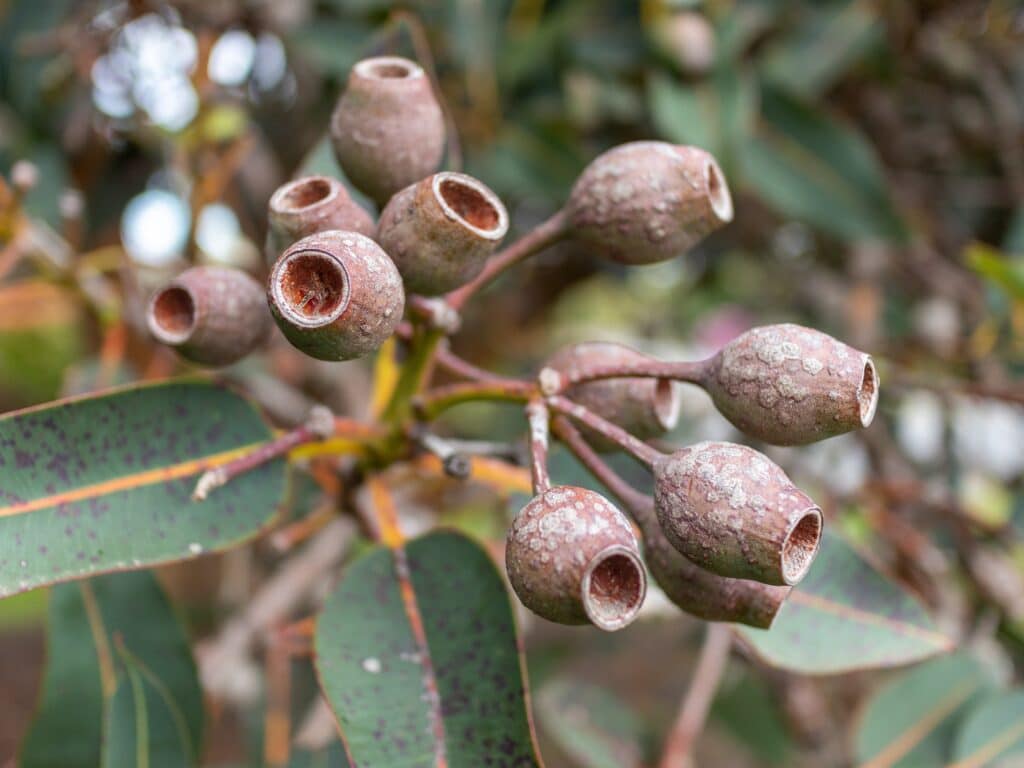
Bigger space to fill? Eucalyptus caesia (Silver Princess) is one of the finest small native trees for Perth – weeping silver foliage, vivid crimson flowers, and it thrives in sandy, well-drained soil. Hakea laurina (Pincushion Hakea) is another standout, with striking globe-shaped flowers in crimson and cream that double as a food source for native birds.
Sun and shade
Most Perth garden native plants want full sun. Kangaroo Paw, Banksia and Grevillea all need six or more hours of direct light to perform their best. For shadier spots under existing trees or beside fences, Dianella ‘Cassa Blue’ handles part shade well, and native ground covers like Dichondra repens thrive whereturf would struggle. If your garden has a mix of conditions, understanding the key points to consider in Perth landscape design – including how sun and wind patterns shift across a single block – will help you group the right plants in the right zones.
Soil
Here’s where Perth natives have the biggest advantage. Most of the metro area sits on the Swan Coastal Plain – sandy soils that are notoriously low in nutrients and become water-repellent after dry periods. Exotic species typically need heavy amendment with clay, compost and wetting agents before they’ll grow in it. WA natives are adapted to precisely these conditions from the start.
One practical detail worth knowing: members of the Proteaceae family – Banksia, Grevillea and Hakea – are sensitive to phosphorus. Their specialised root systems evolved to extract nutrients from Western Australia’s ancient, phosphorus-poor soils, and standard garden fertilisers can overwhelm them. Use a low-phosphorus native-specific feed for these species. Other natives, including Callistemon, Melaleuca and Eucalyptus, are generally not phosphorus-sensitive and tolerate a wider range of products.
Beyond good looks
Perth garden native plants aren’t just ornamental. They serve specific practical functions in a well-designed landscape.
Privacy screening
Westringia grows dense enough to block sightlines and handles formal shaping beautifully. Callistemon (Bottlebrush) varieties like ‘Slim’ suit narrow spaces along boundary fences and attract native birds year-round. Taller Grevillea species grow into bushy screens up to three metres and handle heat, sandy soil and even frost without fuss. For a fuller picture of how to create an Australian native garden, Perth-style, including zoning your planting by soil type from the coast to the hills, that guide breaks it down by region.
Borders and edging
Lomandra and Dianella are the workhorses. They stay neat without trimming, provide year-round foliage and come in a range of heights. Planted at three to six per square metre, they create a clean, uniform look along garden beds, retaining walls and pathways.
Feature planting
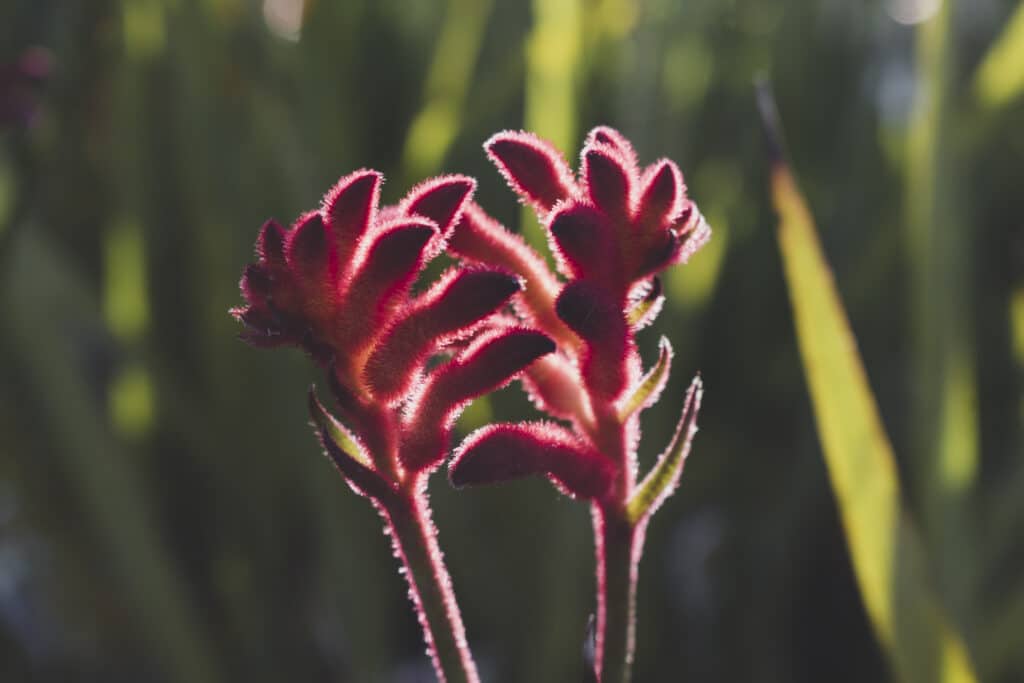
Kangaroo Paw (Anigozanthos) is the showpiece of any native scheme. Tall varieties reach two metres and come in nearly every colour you’d want. Banksia delivers bold structural flower heads that also feed honeyeaters and Black Cockatoos – Banksia menziesii (Firewood Banksia) is a particularly striking species native to the Swan Coastal Plain, with serrated foliage and red-and-orange flower spikes that are iconic across Perth’s remaining bushland. A Grass Tree (Xanthorrhoea) makes a dramatic sculptural anchor that pairs perfectly with contemporary outdoor lighting and hardscaping.
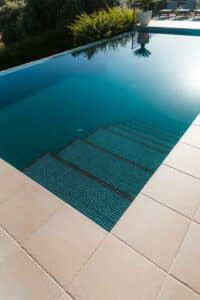
Natives work just as well around pools, too. Species like Lomandra and Dianella are low-litter, handle reflected heat well and won’t drop heavy leaves into the water – making them ideal for poolside planting where form and function need to work together.
Low-maintenance front yards
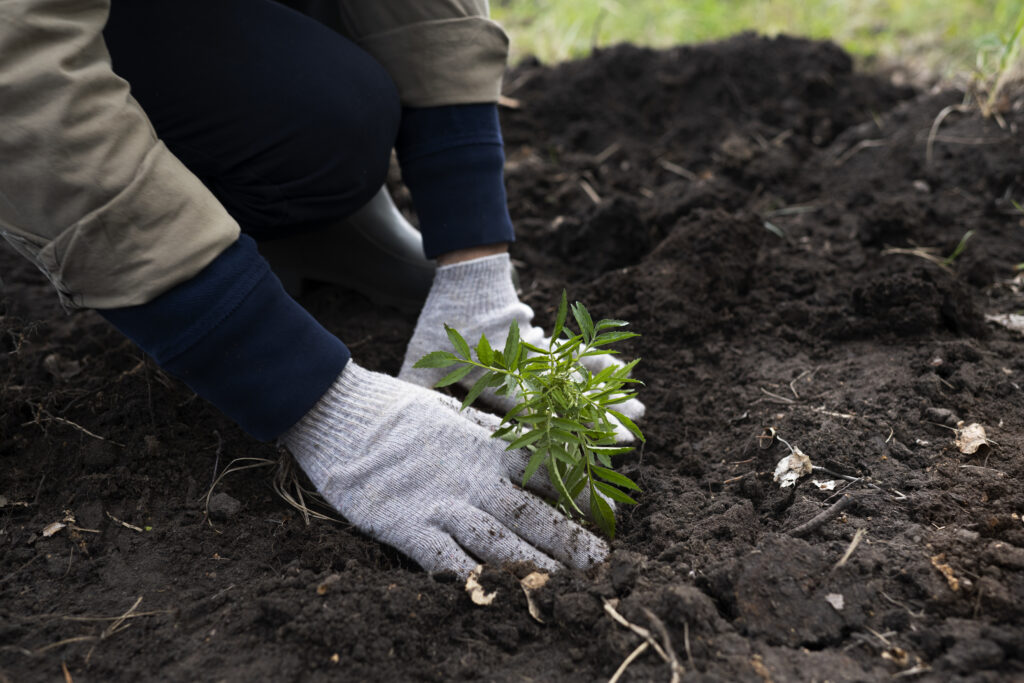
This is where Perth garden native plants earn their keep. Two or three species planted in repeating clusters, mulched with crushed granite instead of lawn, and you’ve got a front yard that looks sharp year-round with almost no ongoing effort. No mowing, no edging, and minimal watering. The WA Government’s Waterwise Greening Scheme is actively encouraging this approach, with native plant giveaways and waterwise verge programmes running across Perth councils. Late autumn to early winter is the best time to plant, as cooler temperatures and incoming rain help new plants establish before their first summer.
Ready to plant something that actually works here?
Getting native planting right comes down to choosing species that suit your specific conditions and arranging them with intention. The difference between a garden that looks like it was designed and one that just happened is almost always in the planning – and for many homeowners, working with a landscape designer is the smartest way to get that right from the start.
At Luke’s Landscaping, we design and build outdoor spaces across Perth using plants that are proven in local conditions. From landscape design through to planting, irrigation and construction, we handle the full process from conceptualisation to completion. Every project is tailored to the site, the soil and the lifestyle of the homeowner. Whether you’re after a complete landscaping service or guidance on the planting alone, we can help. If you’re thinking about a garden that works with Perth’s climate instead of against it, get in touch with us to start the conversation.

Frequently asked questions
Lomandra ‘Tanika’, Dianella ‘Cassa Blue’, Westringia ‘Grey Box’ and Kangaroo Paw hybrids are among the most reliable, low-effort natives for Perth. They handle sandy soils, need minimal watering once established and maintain a tidy appearance year-round. For more species recommendations, the Water Corporation’s waterwise plants directory lets you search by location, size and maintenance level.
They do. Perth’s native bees, butterflies, honeyeaters and other wildlife evolved alongside local plants and depend on them for food and shelter. Grevillea, Banksia and Callistemon provide nectar across multiple seasons, while Hakea fruits are an important food source for threatened Black Cockatoos. You can explore more about Australian native plants suited to Perth and their wildlife benefits.
You can, but it’s worth grouping them by water needs – a technique called hydrozoning. Keep waterwise natives together in one zone and higher-water exotics in another so your irrigation delivers the right amount to each group without overwatering or underwatering.
Late autumn to early winter. Cooler temperatures and incoming winter rainfall help new plants establish root systems before their first summer dry period. Applying a soil wetting agent at planting time also helps water penetrate Perth’s hydrophobic sandy soils and reach the root zone where it’s needed.
Most need very little. The critical consideration is phosphorus sensitivity in the Proteaceae family – Banksia, Grevillea and Hakea can be damaged by standard fertilisers with high phosphorus content. Use a low-phosphorus native-specific product for these species. Other native families, including Myrtaceae (Callistemon, Melaleuca, Eucalyptus), are generally not phosphorus-sensitive and are more flexible with feeding.