The quick version
- Sheer descents, reflection ponds, rills and sculptural pieces are the most popular modern water feature styles in luxury residential design
- Water introduces sound that measurably reduces stress
- Material choice matters: natural stone stays cool but needs sealing; Corten steel isn’t recommended near pools or the coast
- Pool-integrated water features raise pH through aeration, requiring more frequent chemical management
- Recirculating systems are water-smart-they reuse the same water and aren’t affected by Perth’s sprinkler restrictions
- All electrical work around water features must comply with AS/NZS 3000 and be installed by a licensed electrician
Something changes the moment water starts moving through an outdoor space. You hear it before you see it-a low, steady sheet of water spilling over a stone blade, or a quiet ripple crossing a reflection pond at dusk. It shifts the entire mood. Suddenly, the space feels considered. Intentional. Like somewhere you’d actually want to spend your evening rather than just pass through.
Perth homeowners already live outdoors more than most Australians. The climate almost demands it-mild winters, long dry summers, and enough sunshine (roughly 3,200 hours a year) to make a covered alfresco practically a second living room. But there’s a difference between a backyard that functions well and one that genuinely captivates. Modern water features are often that difference. They introduce sound, movement and visual depth in ways that planting, paving and lighting alone can’t replicate, which is why modern water features are so sought after in luxury landscapes.
So what does a modern water feature actually look like in a luxury Perth backyard? And how do you choose one that works with our climate-the UV, the wind, the sandy soils, the bore water-rather than against it?
The styles defining modern water features in luxury homes
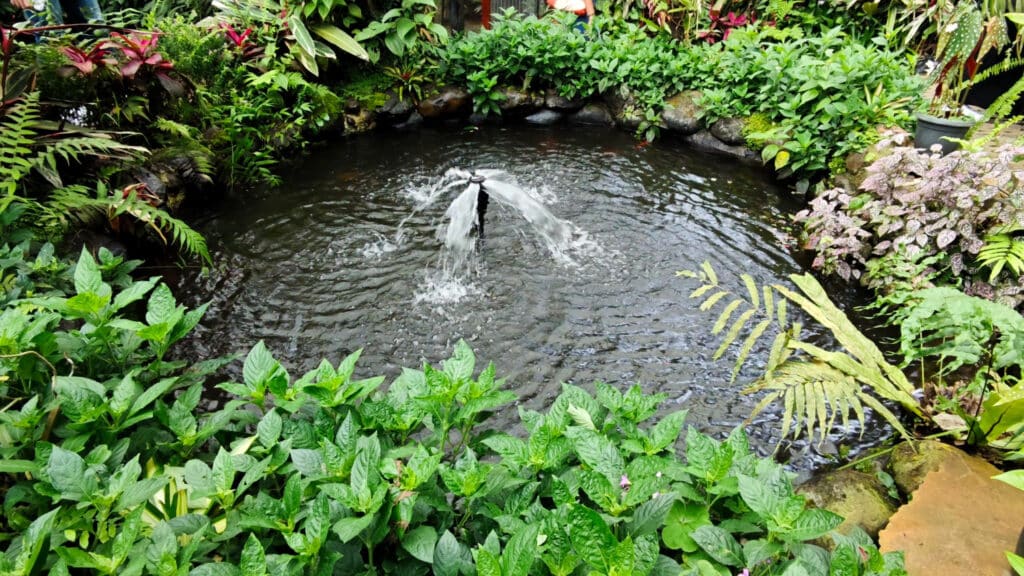
Not all water features suit every space. The right style depends on your architecture, the scale of your outdoor area, and the mood you’re after. Here are the five approaches that define contemporary luxury design out of the vast range of water features available.
Sheer descents and blade waterfalls
A sheer descent is a horizontal outlet that releases water in a smooth, unbroken sheet. Think a glass-like curtain of water falling from a raised wall into a pool or catch basin below. They’re sleek, architectural and almost hypnotic to watch.
The engineering is precise. Water is supplied through dedicated plumbing designed to maintain a smooth, even sheet of water. Too little pressure breaks the sheet; too much creates turbulence and noise. Sheer descents work beautifully integrated into pool landscaping or mounted on a freestanding feature wall.
Reflection ponds
Still, dark-bottomed basins designed to mirror the sky, surrounding architecture and landscape. Reflection ponds create a meditative quality that pairs naturally with minimalist Perth home designs. They’re deliberately quiet-no splash, no cascade, just calm water and the visual weight it carries.
Scale matters. A reflection pond that’s too small looks like a puddle. They work best when sized generously so the surface can hold a mirror image.
Rills and linear channels
A rill is a narrow water channel, that guides water in a deliberate line through the landscape. The concept has ancient roots in Islamic garden design, but modern rills are clean-lined, geometric and often cut from stone or formed in concrete.
They’re particularly effective in larger properties where you want to lead the eye from one zone to another-from an alfresco towards a garden, or along a pathway to a pool.
Sculptural statement pieces
These are freestanding works. Corten steel blades with water sheeting down their face, carved stone columns with water bubbling from the top, or abstract bronze forms where water traces unpredictable paths are just a few examples. A sculptural water feature acts as a focal point, the way a piece of art does indoors.
The key is restraint. One well-placed piece elevates a space. Three competing for attention create visual noise.
Clean-lined fountains
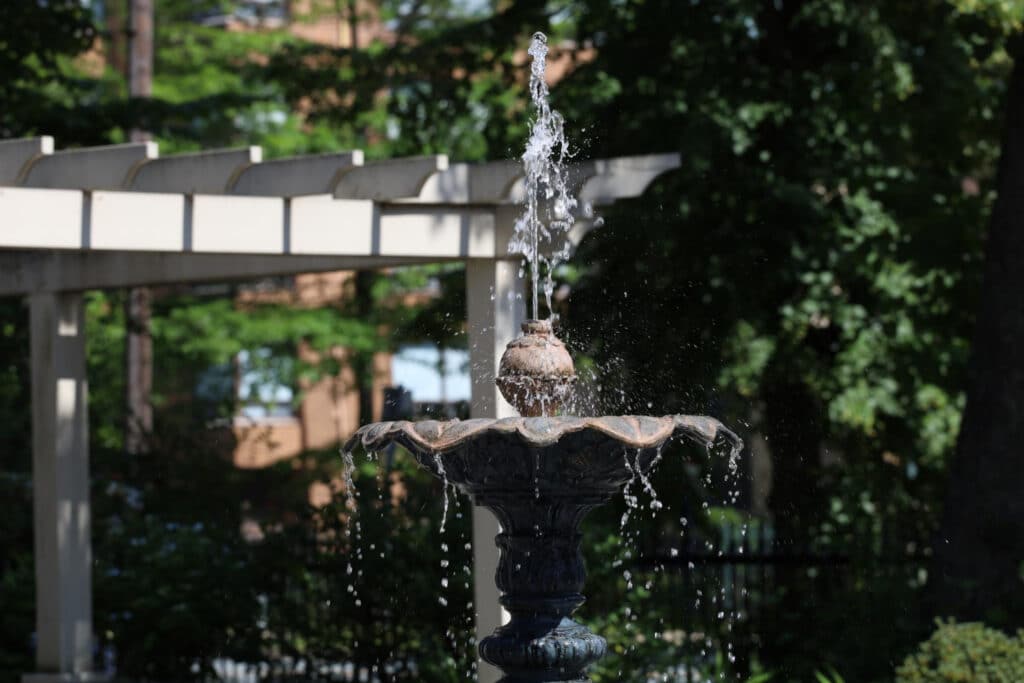
Modern fountains have moved a long way from classical tiered bowls, transforming the traditional fountain into a modern architectural statement. Contemporary versions use geometric forms-rectangular basins, cubic volumes, cylindrical risers-in honed stone, concrete or brushed stainless steel. The water movement is controlled: a single gentle arc, a raised spill edge, or a bubbling surface. They suit courtyards and smaller spaces where a sheer descent or rill would overwhelm the proportions.
How modern water features transform a luxury landscape
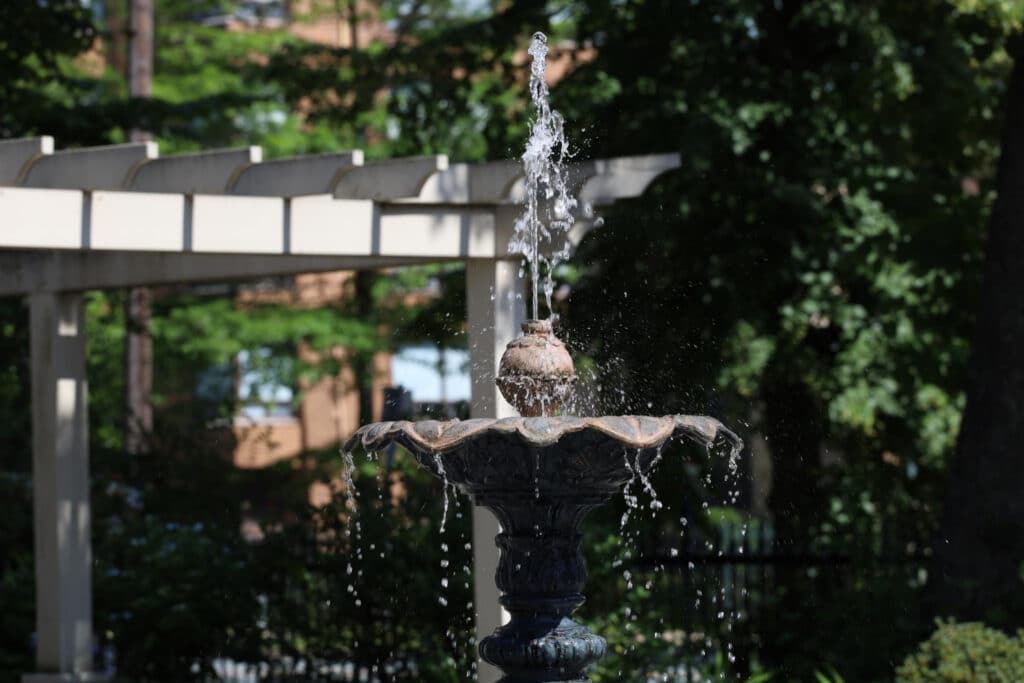
A water feature isn’t just decorative. It changes how a space feels – acoustically, visually and even psychologically.
Sound does more than you’d think
Research from the University of Zurich found that listening to water sounds before a stressful event significantly reduced the body’s cortisol response compared to music or silence, proving the calming effect of the sound of flowing water. That’s measurable endocrine change, not anecdote.
Movement and visual depth
Still landscapes-even beautifully planted ones-can feel flat. Water adds movement. Light refracts across a rippling surface. Shadows shift. At night, outdoor lighting reflecting off water creates effects you can’t achieve with static materials.
The value question
Virginia Tech research on landscape design and property value found that well-designed landscaping can increase a home’s perceived value by 5.5% to 12.7%, with design sophistication ranked as the single most important factor. While no Australian study has isolated water features specifically, the principle holds: intentional design details signal quality, and buyers notice.
Material choices that define a premium look
The material you choose for a water feature does two things simultaneously: it sets the aesthetic tone, and it determines how the feature performs over five, 10, or 20 years in Perth’s demanding conditions.
Natural stone
Granite, limestone and basalt are the most common natural stone choices for water features. Each behaves differently.
Granite is virtually indestructible, but dark options absorb significant heat in Perth’s summer and read as heavy. Lighter honed granite works well for basins and spillways where durability matters most.
Limestone stays cooler underfoot and visually connects to Perth’s coastal palette. However, it’s calcareous and reacts to acidic water. If your feature uses bore water with a low pH (common in Perth’s Bassendean sand suburbs, where groundwater can sit as low as pH 4.0), unsealed limestone will erode. It needs sealing every two to three years.
Basalt offers a dramatic dark finish and excellent durability, but it gets hot. Avoid it for surfaces people might touch during the summer.
Corten steel
Corten (weathering steel) develops a distinctive rust-coloured patina over six months to three years. It’s widely used in sculptural features and water blades.
But there are important limitations for Perth. BlueScope’s technical guidance explicitly states their REDCOR product is not recommended for constant wet applications, high-humidity environments, or locations near the coast. That last point rules out a significant portion of metro Perth. During patina development, water running over Corten will stain adjacent paving and concrete.
Best used as a sculptural accent-a vertical blade with water sheeting down one face, away from pools and porous surfaces.
Stainless steel
For pool-adjacent or coastal features, stainless steel is the safer choice. The critical distinction: 304 (standard) versus 316 (marine grade). The Australian Stainless Steel Development Association recommends 316 as the minimum for any application exposed to chlorides: coastal salt air, pool splash zones and bore water all qualify. Marine-grade 316 stainless steel is recommended for coastal or poolside installations because it resists corrosion far better than standard stainless.
Brushed and satin finishes hide water spots better than mirror polish and soften glare under Perth’s intense UV.
Concrete and rendered finishes
Poured concrete and rendered block walls are the most cost-effective way to build large water feature structures. They accept almost any finish: painted, rendered, tiled or clad in stone, and offer complete design freedom for custom shapes.
Concrete basins must be properly waterproofed and built to withstand constant water exposure. Sealers need reapplication every three to five years, more frequently in full sun.
Integrating modern water features with pools, paving and planting
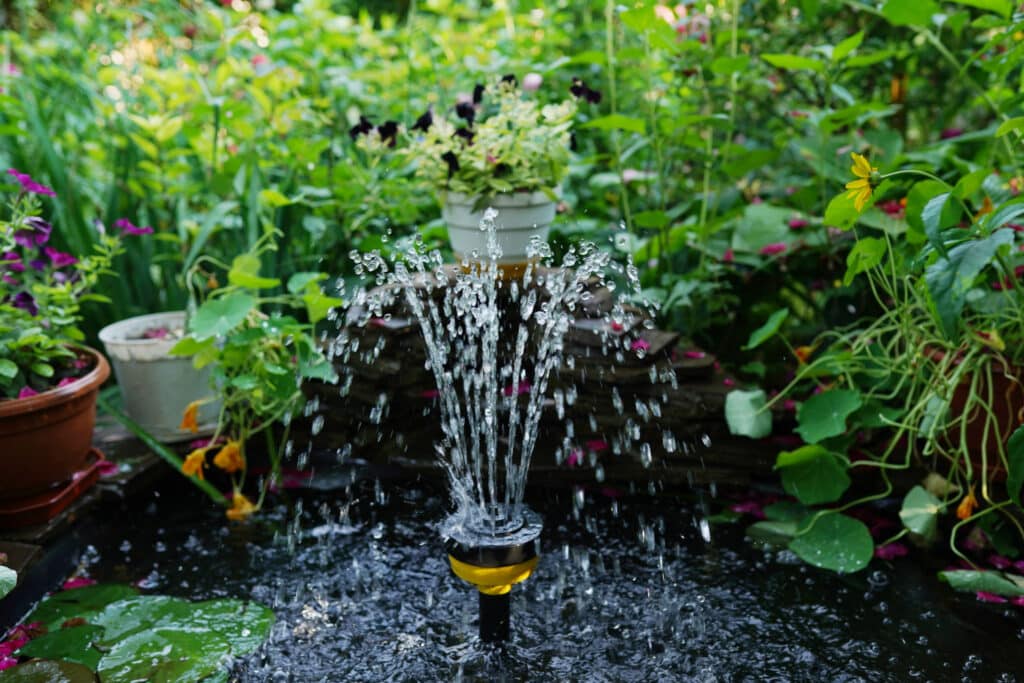
The most impressive water features don’t stand alone. They’re designed as part of a cohesive landscape.
Pool integration changes the chemistry
Connecting a sheer descent or waterfall to your pool can look spectacular, but it does affect water chemistry. The extra movement and aeration can gradually raise the pool’s pH, which means the water may need slightly more frequent balancing. Running these features on a timer rather than continuously helps keep things easier to manage.
Paving sets the stage
Water features need a visual platform. The material and colour of the surrounding paving should complement the feature rather than compete with it. Light limestone or honed concrete around a dark basalt basin creates contrast and draws the eye. Cohesive tones create seamless flow.
Planting softens the edges
Strategic planting around a water feature softens hard lines and connects built elements to the natural landscape. In Perth, waterwise species like Lomandra longifolia ‘Tanika’, Dianella caerulea and native rushes (Juncus species) tolerate humidity near water while needing minimal irrigation. The Water Corporation’s Waterwise plants directory is the best local resource.
Avoid trees that drop significant leaf litter directly over water. You’ll spend more time cleaning than enjoying.
Lighting is the night shift
Underwater LED fixtures transform a daytime feature into a nighttime centrepiece. Just keep in mind that all electrical work must be carried out by a licensed electrician. This is non-negotiable under WA regulations.
What to think about before you build
A luxury water feature is only as good as its planning. A few considerations separate features that last from those that become headaches.
Scale and the Fremantle Doctor
Perth’s afternoon sea breeze arrives from the southwest in summer, and it will catch exposed water. Open fountains with upward jets lose water to spray drift; sheer descents and enclosed features handle wind far better. Position features on the sheltered side of your property or behind windbreak planting where possible.
Pumps and running costs
Running costs depend on pump size and operating hours. Smaller decorative features cost very little to run, while large waterfall-style features use more energy. Variable-speed pumps reduce energy use significantly-the Australian Government reports they use up to 55% less than single-speed alternatives.
Recirculating systems and water restrictions
Recirculating features reuse the same water and aren’t classified as sprinkler systems, meaning they’re unaffected by Perth’s two-day-per-week watering roster. You’ll top up periodically to offset evaporation, but this is minimal compared to garden irrigation.
Mosquitoes
Stagnant water can attract mosquitoes, which is why a functioning pump and circulation system are essential. Moving water prevents breeding. A functioning recirculating pump creates enough disturbance to stop egg-laying. But if the pump fails and water sits still for roughly a week, your feature becomes a breeding site. Maintenance isn’t optional-it’s a health consideration.
Ongoing care
Like any outdoor feature, occasional maintenance is needed to keep pumps, filters and finishes performing well. In Perth’s UV, rubber seals and plastic fittings degrade faster than manufacturers suggest. Inspect them annually and replace proactively.
Ready to design a water feature for your backyard?
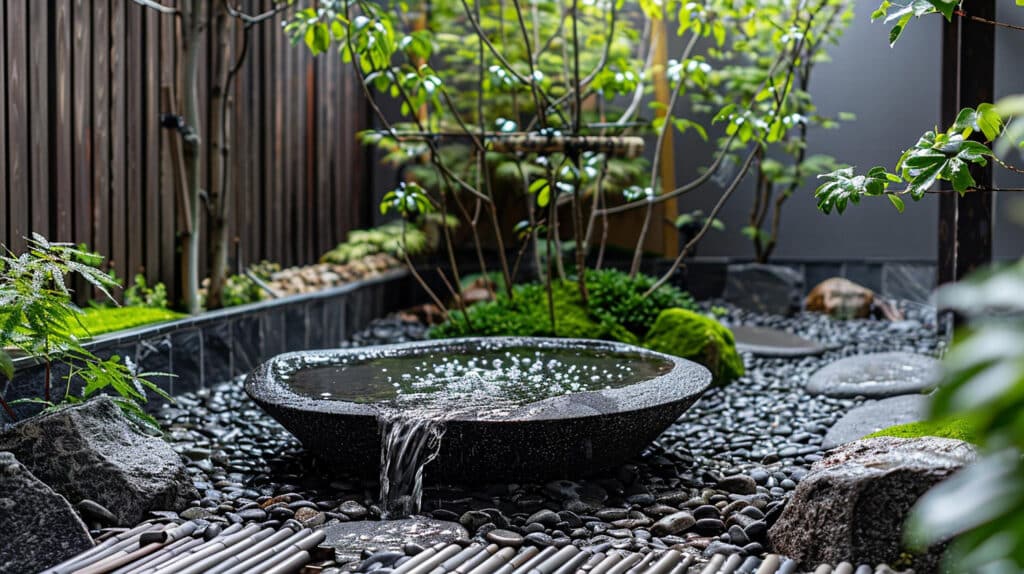
If you’ve been imagining what a water feature might do for your outdoor space, how it might sound on a warm evening, how it might tie your pool, paving and planting into something that feels genuinely resort-quality, you’re asking the right questions about garden water features.
Here at Luke’s Landscaping, we’ve been designing and building luxury outdoor spaces across Perth since 2008. With 200+ five-star Google reviews and a team that understands everything from Perth’s sandy soils to bore water chemistry, we handle projects from concept through to completion.
Whether it’s a sheer descent integrated into your pool, a sculptural Corten blade on a sheltered terrace, or a reflection pond that anchors your entire garden design, we can help you plan a water feature that works with your property, your lifestyle and Perth’s conditions.
Get a free quote today, call us for a chat, or explore our portfolio to see what’s possible.
Frequently asked questions
Recirculating systems-the vast majority of residential water features-reuse the same water continuously. The only loss is through evaporation, which in Perth’s climate can be meaningful for large open features. A shaded feature loses significantly less. Top-ups are typically done weekly in summer.
Yes, though it’s easier during pool construction. Retrofitting a sheer descent requires plumbing modifications and potentially structural changes to the pool wall or a new feature wall. A freestanding water feature near the pool is simpler to add after the fact, as it operates on an independent pump and catch basin.
Core tasks include quarterly pump inspections, seasonal filter cleaning, water level monitoring (daily in peak summer), and algae management. For natural stone features, resealing every two to three years is essential. Pool-integrated features need more frequent water chemistry testing due to the pH rise caused by aeration.
Standalone residential water features generally don’t require a building permit. However, if the feature holds water deeper than 300mm, it may trigger pool barrier requirements. Consult your local council to confirm. Electrical and plumbing work must be carried out by licensed tradespeople.