The quick version
- The best backyard entertainment designs are built around function first, aesthetics second
- Zone your space into distinct areas—cooking, dining, lounging, play
- Shade is a health necessity in Perth—UV hits extreme levels in summer
- Warm lighting extends your evenings and shapes how people feel in your space
- Indoor-outdoor connection is the design move that changes how you actually live
- Design specifically for Perth: extreme UV, the lowest tree canopy of any major Australian city, and water restrictions that aren’t going away
Perth gets more sunshine than almost any city on Earth. Around 3,200 hours of it every year—more than Rome, more than Los Angeles, more than most places Australians have ever dreamed of moving to. Warm, dry summers. Negligible rainfall from December to February. A reliable afternoon sea breeze that rolls in off the Indian Ocean like it’s on a schedule.
And yet, walk through the backyards of most Perth homes, and you’ll find a concrete slab, a sun-bleached patio set, and a barbecue jammed against the fence.
That’s not a backyard. That’s a missed opportunity.
The gap between having outdoor space and having a backyard entertainment design that genuinely works for how you live is almost entirely a design problem. It comes down to understanding how people actually gather, move, and relax-and then building a space around that. This guide breaks down exactly how to do it.
Start With How People Actually Move
Here’s the mistake most people make. They start with aesthetics-a paving style from Pinterest, a pergola design from a magazine-and then try to fit their lifestyle around it. Good backyard entertainment design works the other way around.
Think about the last time you hosted. Some guests gathered in the kitchen, hovering near the food. Others found a seat and stayed there all night. A few moved between conversation groups, never quite settling. Someone needed to keep an eye on the kids while still being part of the adult conversation. Someone else quietly found a corner away from the main flow.
Every one of those people was telling you something about how outdoor spaces actually work.
The practical takeaway: before you choose a single paver, sketch how you want people to move through your space. Where does the flow from the house land? Where do guests naturally gravitate? Where do you want them to sit, stand, and linger? Design follows those answers-not the other way around.
Zone your backyard like the room it should be
The most rigorous research on backyard entertainment designs doesn’t come from architects or landscape designers. It comes from university extension services. Oklahoma State University Extension, Michigan State University Extension, and NC State Extension have all independently documented the same principle: the most functional outdoor living spaces are designed exactly like interior rooms-each outdoor room with defined boundaries, a clear purpose, and intentional connections between zones.
In practice, this means treating your backyard as a series of distinct spaces: a cooking zone, a dining zone, a lounge zone, and a play area if children are in the picture. Each has different requirements for surface treatment, shade, furniture, and lighting. And each needs a thoughtful transition between it and the next.
Effective zoning doesn’t require walls. A change in paving material, a low garden bed, potted plants, a step in level-these are all enough to signal the shift from one zone to the next. The sense of enclosure they create matters: people feel more comfortable and stay longer in outdoor spaces with a defined edge. An open, shapeless area that bleeds into the lawn gives guests nowhere to settle.
The zones worth planning for
A well-designed entertaining backyard typically includes at least three distinct areas. The cooking zone sits closest to the kitchen door-hard-wearing, easy to clean, with task lighting and adequate clearance around the barbecue, pizza oven, or outdoor kitchen. The dining area is proportioned for a table and chairs with room to move, designed so guests face each other rather than a wall or fence. The seating area-your lounge zone-is softer and lower, the place guests drift after eating; a fire pit at its centre gives people a reason to stay well into the evening.
If children are part of your household, a fourth defined play area with clear sightlines to the adult entertaining space removes the single biggest barrier to parents genuinely relaxing outdoors.
Shade is not a luxury in Perth
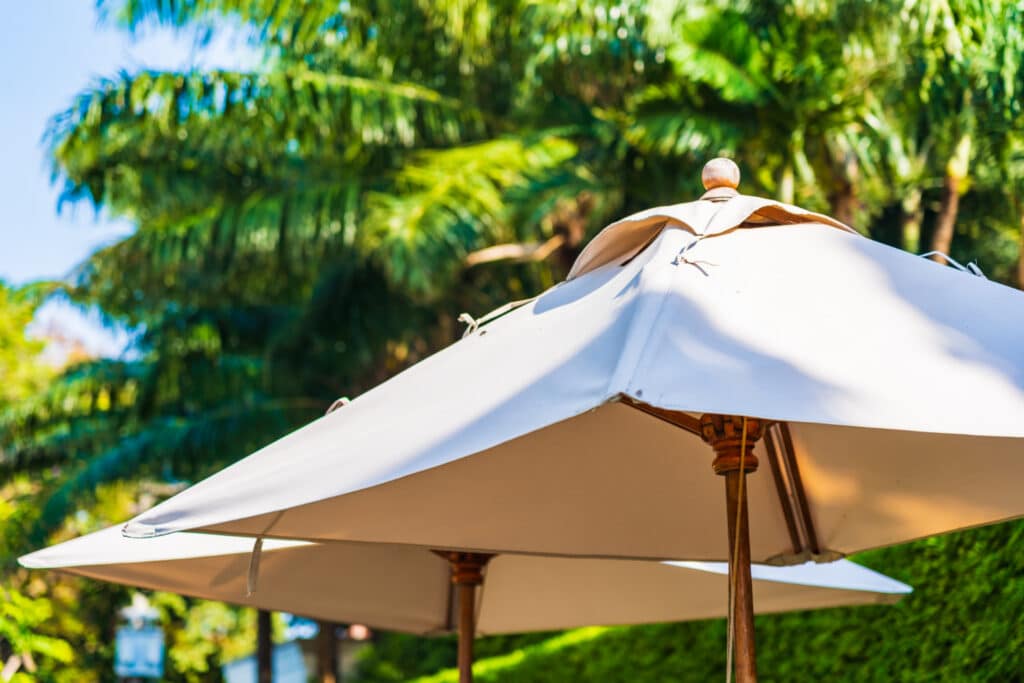
This is the part most homeowners underestimate, and it’s worth sitting with for a moment.
Perth’s UV Index reaches 12-Extreme on summer days. That’s the highest classification on the scale. On a clear January day, unprotected skin can burn in as little as 10 minutes.
None of that changes because you’re in your own backyard.
But here’s what good shade actually delivers: SunSmart’s published guidelines confirm that a well-designed shade structure reduces UV exposure by up to 75%. That transforms an outdoor space from one you abandon by 11 am into one you can comfortably use through the peak of the day.
The Cancer Council’s guidance on shade design is specific and practically useful. A canopy should extend at least 1 metre past the area of use on all sides to account for the sun’s angle shifting throughout the day. A combination of built structure-pergola, patio cover, shade sail-and natural shade from trees and screening plants provides the most reliable protection. And surface materials beneath the shade matter more than most people realise: concrete reflects 8–12% of UV back upward, dry sand reflects 15–18%, while lawn reflects only 2–5%. A multi-material, well-planted space protects people better than an all-paved one.
There’s a second, Perth-specific reason shade demands deliberate attention. Perth has the lowest tree canopy cover of any major Australian city-just 16% overall, with 12% on private land. Only 22% of Perth residents live in suburbs with more than 20% canopy coverage, compared to 44% in Sydney and 79% in Brisbane. You cannot rely on existing trees to do the work. In Perth, shade has to be designed in from the start.
There’s one more wrinkle worth knowing. Research published by UNSW in 2024 found that trees reduce transpiration and lose significant cooling capacity once temperatures exceed approximately 34°C-a self-protective mechanism that cuts their effectiveness on the days you need cooling most. Perth regularly exceeds 34°C in summer. On those days, built shade structures do the work trees cannot.
Lighting that extends your night
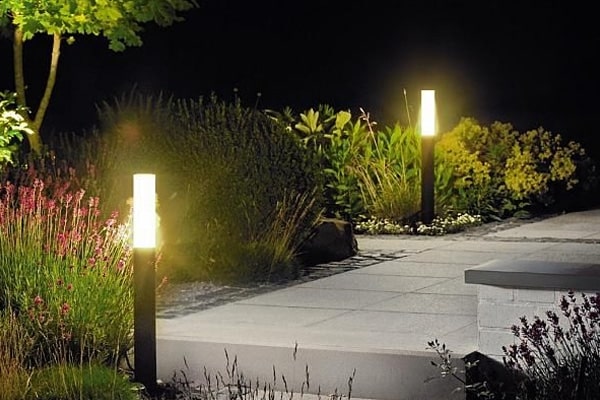
Perth’s summer evenings are something else. Temperatures in the low 20s. The Fremantle Doctor settling into a gentle breeze. The sky fading slowly after 8pm. The conditions for outdoor entertaining are, frankly, perfect-if your backyard is lit to match.
Outdoor lighting does more than make a space visible after dark. A 2022 study published in Sustainability found that lighting quality directly affects how often people use outdoor spaces at night, how long they stay, and how safe and comfortable they feel. It shapes the entire social experience of an outdoor area.
Layer your lighting across zones: task lighting over the cooking area, ambient low-level lighting through lounge and dining zones, and path lighting to guide movement safely. Dimmer controls are worth every cent-they allow the same space to shift from a bright afternoon gathering to a warm evening dinner without changing a thing.
The indoor-outdoor connection that changes everything
Ask any Perth homeowner what they love most about their home. Few will say the hallway. Almost none will say the laundry. But most will say something about outside. Around 70% of Australian private dwellings are separate houses, according to the 2021 ABS Census. That’s a country that has chosen, again and again, the home with space around it. The backyard isn’t an afterthought in Australian life. It’s part of why people live the way they do here.
But a backyard only earns its place when it functions as a genuine extension of the home. Not a separate territory you occasionally visit-a space that flows naturally from the kitchen, the living room, daily life. The design principles are well-established: wide sliding or stacking doors that fully retract the indoor-to-outdoor wall, a consistent floor level between rooms, harmonious materials, and a sightline from the kitchen bench to the yard so the person cooking stays part of the gathering rather than apart from it.
The sensory details matter too. Water features that carry the sound of water from inside to out. Potted plants that soften the threshold between rooms. The warmth of a fire pit is visible through the glass on a cool evening. Research on biophilic design consistently shows that spaces connecting people with the outdoors through views, airflow, and direct access measurably reduce stress and improve mood.
Your backyard isn’t just somewhere to host a barbecue. It’s an extension of your home’s capacity to make you feel genuinely well.
Perth-specific considerations worth planning for
Perth is one of the best places on Earth to entertain outdoors. It also has some very specific rules about how you build the space to do it. Two practical constraints shape every backyard entertainment design here: water and permits.
Perth operates under Waterwise garden guidelines and bore sprinkler rosters capped at 2 days per week since 2022, with a mandatory winter switch-off from June to August. Smart design works with these restrictions: hydrozoning plants by water needs, favouring locally adapted species, minimising lawn, and using drip or soaker irrigation in garden beds.
On permits: a building permit is required for any patio attached to a building, regardless of size. Freestanding structures under 10m² and 2.4m high are generally exempt, though rules vary by council. Some structures also require separate planning approval. Luke’s Landscaping’s guide to council approvals covers this for Perth, and the City of Joondalup’s patio and pergola guidance walks through the full approval process clearly.
Ready to design a backyard that you want to entertain in?
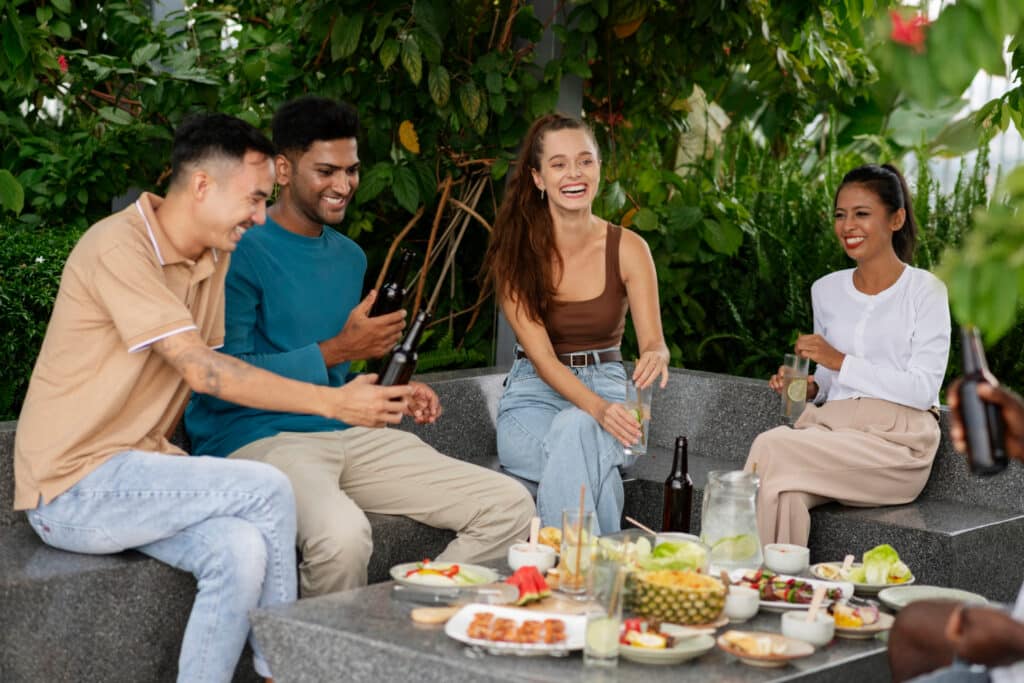
The honest truth: most Perth backyards underperform not because of a lack of space or money, but because they were never designed at all. They were installed. Surfaces were laid, furniture was placed, and everyone hoped for the best.
A backyard built around how you actually entertain-zoned for flow, shaded for Perth’s UV reality, lit for evening use, and connected seamlessly to the home-doesn’t just look better. It changes how frequently you use it, how long guests stay, and how much you genuinely enjoy living in one of the world’s most enviable outdoor climates.
At Luke’s Landscaping, we design outdoor spaces that work as hard as the homes they belong to. From concept and zoning through to construction, planting, and lighting, we bring design expertise, local climate knowledge, and hands-on Perth experience to create backyards homeowners actually use – every weekend, not just at Christmas. Give us a call to start planning your outdoor entertaining space today.
Frequently asked questions
Zoning. Separating your cooking, dining, lounging, and play areas into distinct, defined spaces makes everything else-furniture, lighting, planting, shade-work better. A well-zoned backyard flows naturally and removes the congestion that makes entertaining feel chaotic. University extension research recommends proportioning your main entertaining area closer to a square or 2:3 rectangle rather than the common but dysfunctional long, narrow strip along the back of the house.
More than most people plan for. SunSmart’s guidelines recommend shade structures extending at least 1 metre past the area of use on all sides. In Perth specifically, shade is a public health consideration. Good shade reduces UV exposure by up to 75%.
A building permit is required for any patio attached to a building. Freestanding structures under 10m² and 2.4m high are generally exempt from building permits, though rules vary by council. Some structures also require separate planning (development) approval. Our guide to council approvals for outdoor renovations is a good starting point for Perth homeowners navigating this process.
Layered warm-toned lighting. Research recommends a colour temperature of 2700–3500K for outdoor social areas-warm light promotes relaxation and conversation. Aim for around 25–35 lux across dining and lounge zones, brighter task lighting over the cooking area, and dimmer controls so the same space can transition between afternoon and evening use.
Start with low-water planting from the outset. Hydrozone your garden by grouping plants with similar water needs, use locally adapted WA species where possible, minimise lawn area or switch to a drought-tolerant variety such as Zoysia or soft-leafed Buffalo grass, and use drip or soaker irrigation rather than overhead sprinklers. Perth’s Be Groundwater Wise program offers detailed WA-specific guidance worth reading before any project begins.