The quick version
- Perth’s sandy soils shift easily under water pressure.
- Most rainfall arrives during winter, increasing erosion risk.
- Retaining walls stabilise slopes and prevent soil movement.
- Proper drainage behind the wall is essential.
- Different wall materials suit different sites.
Soil erosion rarely starts with something dramatic. It usually begins with small changes, a patch of sand collecting at the bottom of a slope after heavy rain, a paving stone that suddenly feels loose underfoot, or a tree root that wasn’t exposed last year. Many Perth homeowners notice these signs but assume they’re minor or temporary.
Over time, however, these small shifts can develop into more serious erosion issues, especially during Perth’s winter rains.
Much of Perth sits on loose, sandy soil that doesn’t hold together well when water moves through it. Combined with sloping blocks and heavy seasonal rainfall, this makes soil erosion a common problem across many properties.
That’s where retaining walls come in. A retaining wall for soil erosion does more than shape a garden-it stabilises soil, controls water flow, and helps protect paving, garden beds, and even nearby structures from gradual land movement.
Understanding what’s happening beneath your property is the first step to stopping erosion before it causes costly damage.
Why Perth’s soil is uniquely vulnerable to erosion
Most soils naturally hold together. Clay-rich soils, for example, contain particles that bind tightly and create a stable structure. Perth’s soils behave very differently.
Much of the Perth region sits on Bassendean Sand-a loose, pale sand that contains very little clay or organic material. Without these natural binding elements, the soil doesn’t stay compact when it becomes wet. Instead, it shifts and moves easily under pressure.
This is one of the reasons erosion is such a common issue across Western Australia. In fact, an estimated 6.4 million hectares of WA land are at elevated risk of severe erosion, costing the state tens of millions of dollars each year.
Perth’s climate also plays a role. After long, dry summers, sandy soils often become water-repellent, meaning rainfall initially struggles to soak into the ground. When winter storms arrive, water tends to run across the surface instead. As it flows downhill, it can pick up loose sand and carry it through garden beds, across paving, and toward buildings.
The problem becomes even more noticeable in the Perth Hills. Suburbs such as Kalamunda, Darlington, and Roleystone sit higher on the Darling Scarp and receive more winter rainfall than much of the metro area. Combined with steep blocks and loose soils, these conditions make hillside properties especially vulnerable to erosion.
The five stages of erosion (and the one that happens underground)
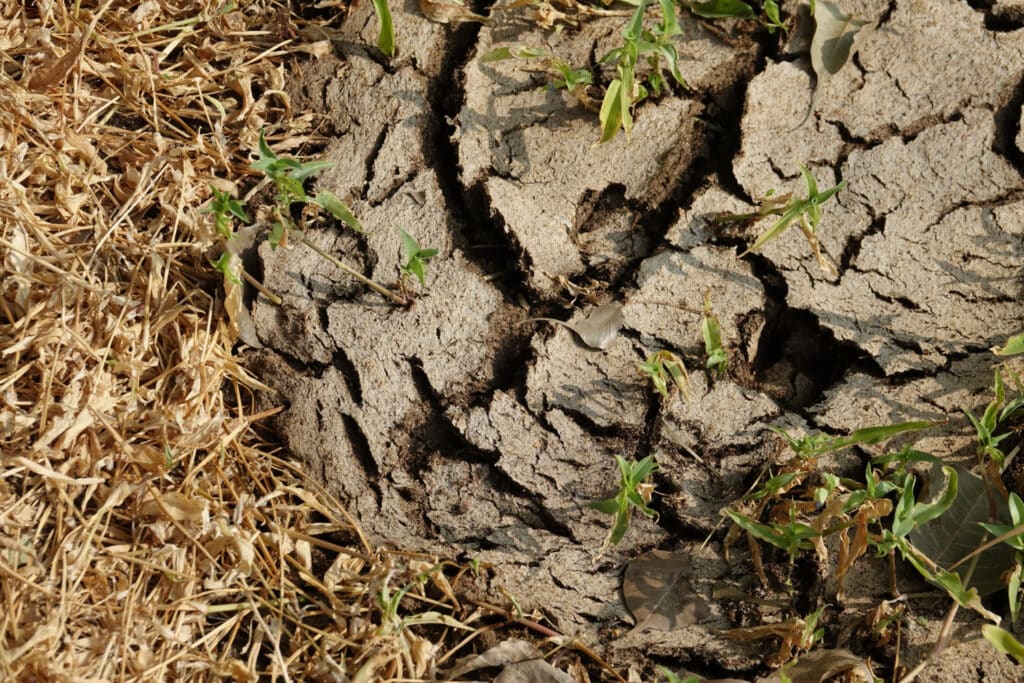
Water erosion doesn’t happen all at once. It usually develops in stages, gradually becoming more damaging if nothing stops it.
It often begins with splash erosion. Heavy rain hits bare sandy soil and knocks loose particles out of place. Over time, water flowing across the surface creates sheet erosion, where a thin layer of soil slowly washes downhill.
As the water continues to move, it starts forming small channels called rills. These channels cut into the topsoil and carry even more sand away with each rainfall. If left untreated, rills can grow into larger gullies that permanently change the shape of the land.
The most serious type of erosion can happen below the surface. Known as tunnel erosion, it occurs when water moves through loose soil underground and slowly washes away fine particles. At first, there may be no visible signs above ground. Then, suddenly, the surface collapses-sometimes creating sinkholes or significant ground movement.
By the time erosion becomes obvious on the surface, damage may already be developing underneath. That’s why installing a retaining wall for soil erosion early can help stabilise soil and prevent more serious problems later.
What it actually does to your property
Soil erosion rarely damages everything at once. It usually begins in the garden and gradually affects other parts of the property.
The first thing to disappear is topsoil-the nutrient-rich layer that plants rely on to grow. As rain washes this layer away, plants begin to struggle and bare patches appear. These exposed areas make erosion worse because there’s nothing left to hold the soil in place. Over time, tree roots can become exposed as the surrounding soil washes away, a clear sign that erosion has already taken hold.
Next, you may start to notice changes in your paving or outdoor surfaces. Paving is typically installed on a compacted sand base. If that base begins to erode, the paving above it can lift, crack, or become uneven. What looks like a paving issue is often a sign that soil and drainage problems are developing underneath.
In more serious cases, erosion can affect the structure of the home itself. When soil moves near the foundations, parts of the building may settle unevenly. This can lead to cracked brickwork, sticking doors, and even damage to plumbing.
There are also broader environmental impacts. Studies in Western Australia have found that large amounts of sand and sediment can wash off unstable sites each year, eventually flowing into waterways such as the Swan-Canning River system.
This is why preventing erosion early is so important. A properly designed retaining wall for soil erosion helps stabilise the soil, protect landscaping and paving, and reduce the risk of more serious structural damage over time.
How a retaining wall for soil erosion actually works
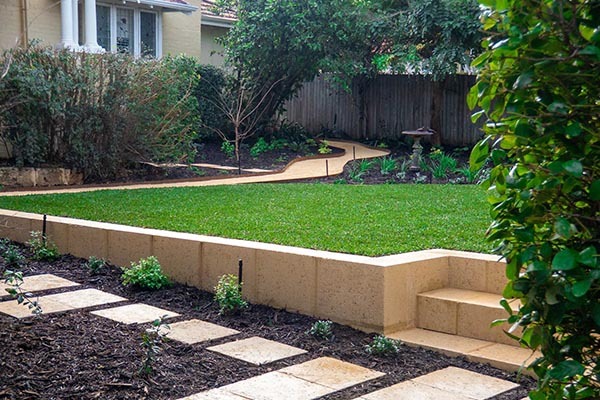
A retaining wall for soil erosion works by eliminating the slope that erosion depends on. It physically holds the soil mass in place, creating level terraces on challenging terrains that interrupt the gradient, reduce runoff velocity, and give heavy rainfall the opportunity to infiltrate rather than accelerate downhill. Research found that well-designed terracing can reduce surface runoff by 70–85% and soil loss by up to 98% compared to unsupported slopes.
But the wall itself is only half the equation. The drainage system behind it is equally critical-and far more often overlooked.
Why drainage is critical for retaining walls
A retaining wall doesn’t just hold back soil. It also needs to manage water.
When heavy rain soaks the soil behind a retaining wall, water builds up in the ground. This creates pressure pushing against the back of the wall. If that pressure isn’t released, it can cause the wall to bow, crack, lean, or eventually fail.
In fact, poor drainage is one of the most common reasons retaining walls fail in Perth. The good news is that it’s also one of the easiest problems to prevent when the wall is designed correctly.
That’s why every well-built retaining wall includes a drainage system behind it. This system allows water to flow safely away from the wall instead of building up in the soil.
A properly designed retaining wall drainage system typically includes four key components:
Filter fabric
A geotextile fabric sits between the soil and the drainage materials. Its job is to stop fine sand particles from washing into the drainage system while still allowing water to pass through.
Gravel drainage layer
A layer of free-draining gravel sits behind the wall. This allows water to move downward easily instead of building up pressure against the wall.
Agricultural (ag) pipe
A perforated drainage pipe is installed at the base of the wall. It collects water from the gravel layer and directs it away from the wall to a safe discharge point, usually a soakwell.
Weep holes
Some retaining walls include small openings called weep holes that allow water to escape through the wall if pressure builds up. Without these drainage elements, water can accumulate behind the wall and eventually cause structural damage.
Retrofitting drainage after a wall is built is difficult and expensive, which is why proper design from the start is so important.
Which wall type suits your block?
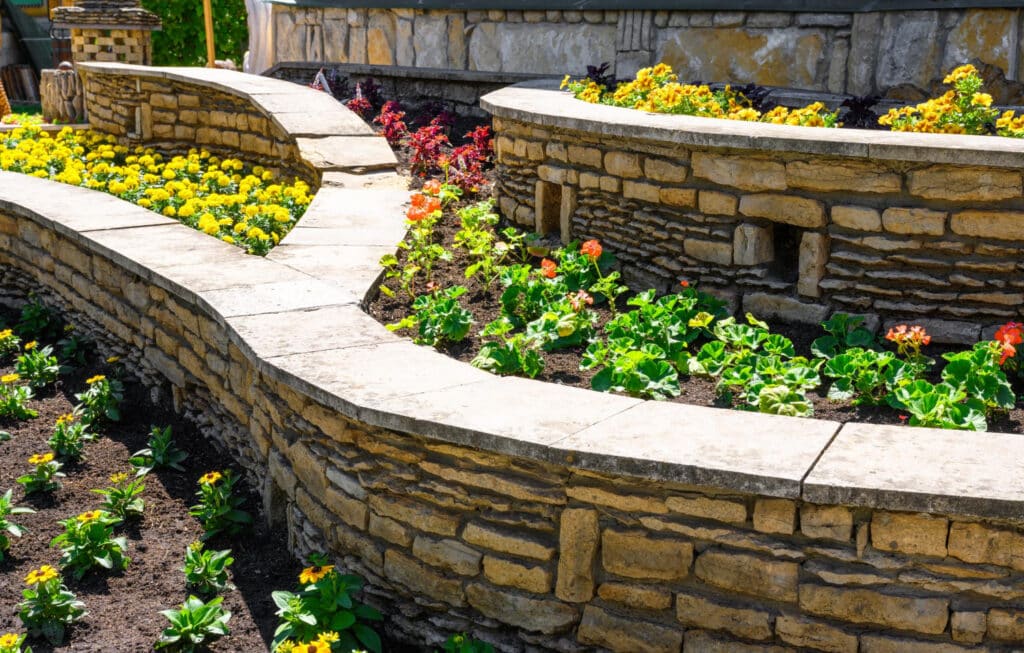
Choosing to build a retaining wall for soil erosion on sloped terrains means selecting the right material for your specific site-retained height, soil conditions, proximity to boundaries, and aesthetic all play a role.
Limestone block
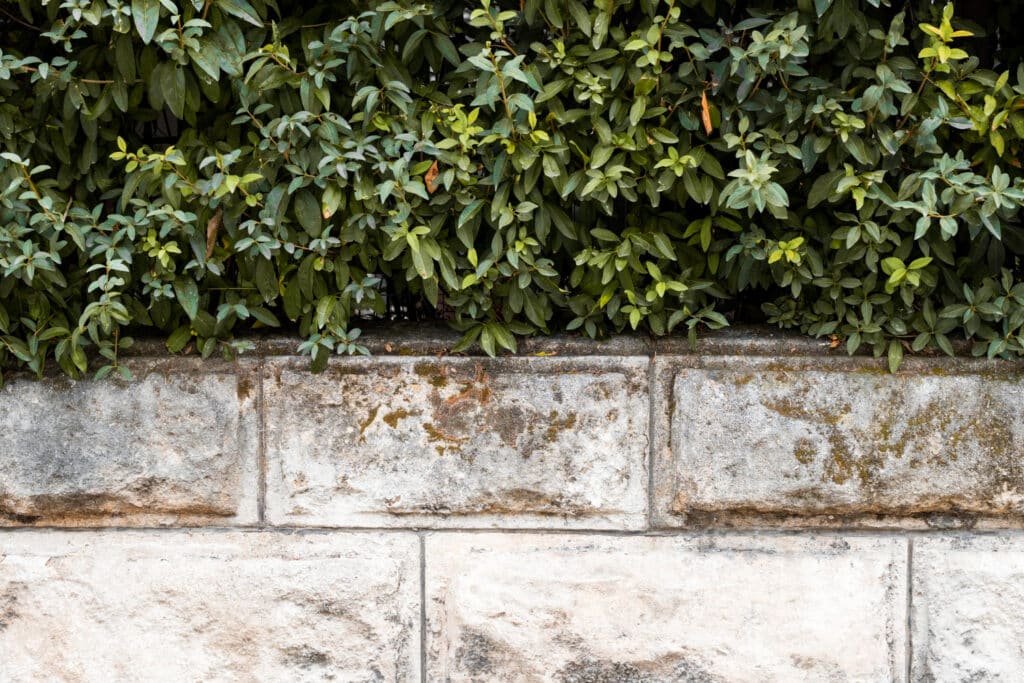
Limestone is one of the most popular retaining wall materials in Perth. It’s locally quarried, relatively affordable, and suits many garden styles. Limestone blocks are heavy and durable, allowing them to hold back soil effectively on many residential blocks without complex foundations. They also handle Perth’s sun and coastal climate well.
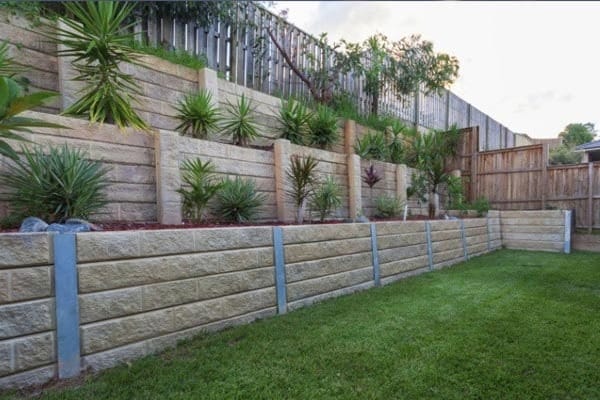
Concrete sleeper walls
Concrete sleeper retaining walls use reinforced concrete panels supported by steel posts. They are one of the strongest and most durable options available.
These walls are well-suited to taller retaining walls or sites with loose sandy soils, as the posts are installed deep into the ground to provide stability. Concrete sleepers are also resistant to rot, fire, and termites, which is an important consideration in Western Australia. With minimal maintenance, concrete sleeper walls can last 40 years or more.
Gabion walls
Gabion walls are made from wire mesh baskets filled with rocks. They have a distinctive natural look and are particularly useful in areas where drainage is a concern. Because water can flow freely through the rocks, gabion walls don’t trap water behind them. This makes them a good option for managing water movement on sloping blocks. That said, they are not always suitable near the coast, as salt air can eventually corrode the metal mesh.
Timber sleeper walls
Timber sleeper walls are often the cheapest option upfront, but they generally have a shorter lifespan than other materials. Timber in constant contact with soil and moisture can warp or rot over time. Western Australia also has high termite activity, which means timber retaining walls may require more maintenance and eventual replacement.
For small garden beds or low walls under about 600mm, timber can work as a short-term solution. For larger or long-term retaining walls, materials like limestone or concrete sleepers are usually a better investment.
The warning signs
Erosion often starts with small changes that are easy to overlook. If you notice any of the following signs on your property, soil movement may already be underway:
- Soil or mulch washing out of garden beds after rain
- Paving becoming uneven, lifting, or cracking
- Tree roots becoming exposed as soil washes away
- Small channels forming in the soil after heavy rainfall
- Sand or sediment collecting at the bottom of slopes
- An existing retaining wall leaning, cracking, or showing white powdery stains
- Sudden dips, sinkholes, or ground movement near a wall or slope
These early warning signs shouldn’t be ignored. Acting early can prevent more serious damage to your garden, paving, or structures.
In Perth, the best time to address erosion issues is before the winter rains begin. Late summer to early autumn is ideal, while the soil is still dry and excavation is easier. Once the winter rain arrives, erosion problems can worsen quickly on unprotected slopes.
Permits, compliance, and legal liability
In Perth, retaining walls are also subject to local building rules. Generally, walls over 500mm high require a building permit, and taller walls may need engineering approval to ensure they’re structurally sound.
Responsibility for a retaining wall usually sits with the property owner who changed the natural ground level, such as through excavation or adding fill. Drainage must also be designed so that stormwater does not flow onto neighbouring properties.
Because requirements can vary between councils, it’s always best to confirm regulations with your local authority or work with an experienced landscaping team, like Luke’s Landscaping, who understands Perth’s building requirements.
Ready to protect your property?
Most Perth homeowners with a sloped block have been watching slow, concerning changes for years-disappearing soil, moving paving, a wall that’s no longer quite vertical. They’ve been meaning to act. They just weren’t sure where to start.
That’s exactly where Luke’s Landscaping comes in. We design and build retaining walls for soil erosion control across Perth and the hills suburbs, from gentle suburban grades to the steep, challenging terrains of Kalamunda, Darlington, and Roleystone. Every retaining wall we build is site-specific, properly drained, structurally engineered where required, and built to last.
Our landscape design consultations address the full picture-slope, drainage, soil conditions, boundary setbacks, council requirements, and your goals for the space. See what’s possible in our completed project portfolio, explore our landscaping services, or get in touch to start the conversation.
A note on native plants and erosion control
Retaining walls stabilise soil structurally, but plants can also help hold soil in place. Many WA-native ground covers develop dense root systems that help bind sandy soil together. Planting them on slopes, terraces, or newly stabilised areas can reduce erosion and improve soil stability over time.
Popular erosion-control plants for Perth gardens include Lomandra, Myoporum parvifolium, and low-growing Grevillea varieties. These hardy natives are well-suited to sandy soils and dry conditions. For newly planted areas, adding coir matting or jute mesh during the first winter can provide extra protection while plants establish.
Frequently asked questions
Not always. On gentle slopes, dense ground cover can sometimes prevent erosion. But if you’re noticing soil movement, exposed roots, uneven paving, or water pooling after rain, a retaining wall for soil erosion may be needed. For moderate to steep slopes, a retaining wall is usually the most reliable long-term solution.
Hydrostatic pressure occurs when water builds up in the soil behind a retaining wall. Without proper drainage, this pressure pushes against the wall and can cause it to bow, crack, or collapse. That’s why retaining walls need drainage systems that allow water to flow away safely.
Concrete sleepers and limestone blocks are the most common choices for Perth homes. Concrete sleepers are very durable and termite-resistant, while limestone is a cost-effective option for lower walls. Gabion walls can work well in areas with high water flow, while timber is cheaper upfront but generally doesn’t last as long in Perth’s climate.
In most cases, the property owner who changed the natural ground level is responsible for building and maintaining the retaining wall. Drainage must also be designed so that water doesn’t flow onto neighbouring properties. Because requirements can vary between councils, it’s best to check local regulations before building a retaining wall.